
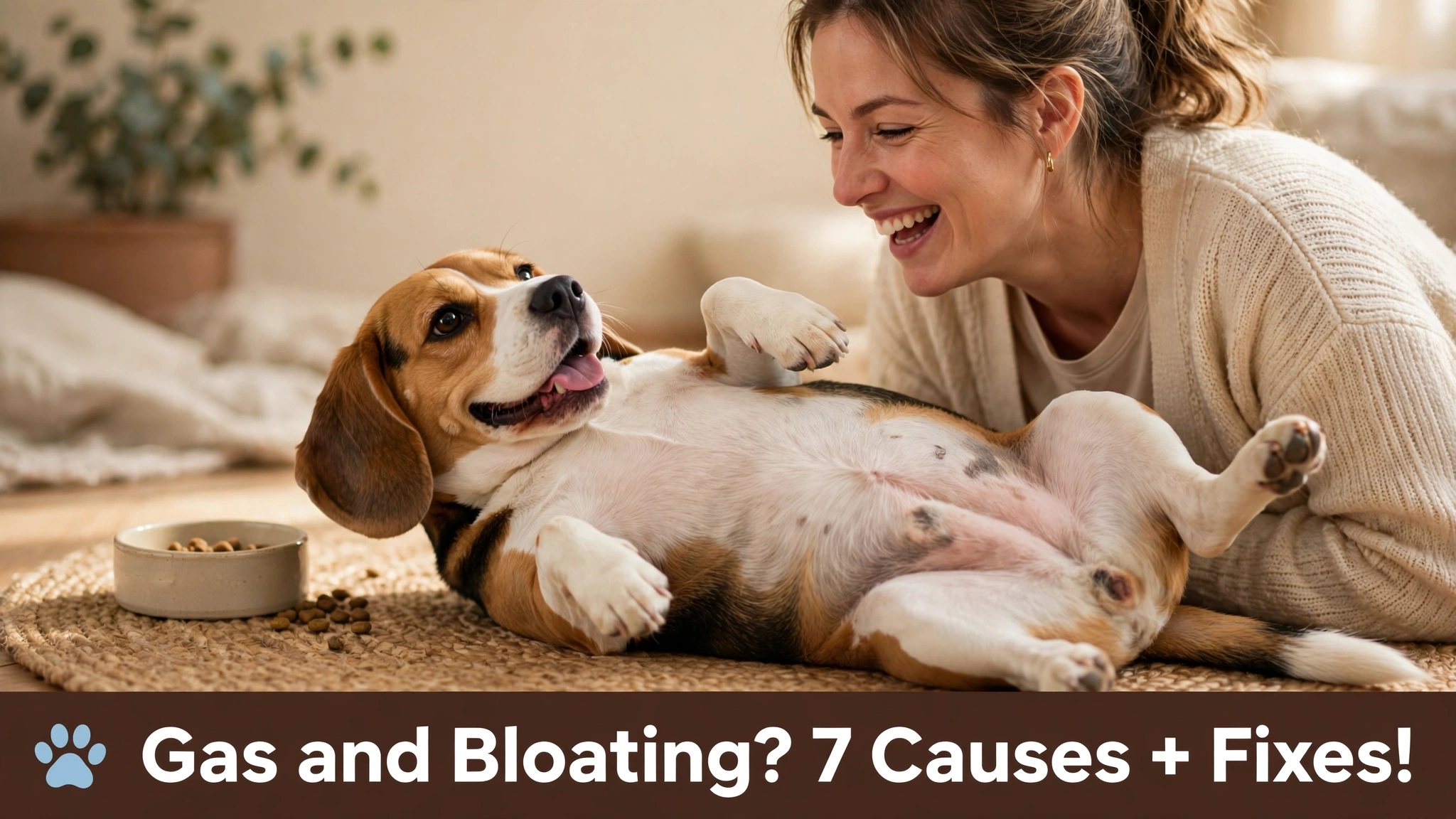
Some evenings, the noise started before I had even sat down to dinner. My dog would finish his bowl in about forty seconds, flop down beside me with a round, tight little belly, and then the room would fill with the kind of gas that made my eyes water. I laughed the first few times. By the third week, I was not laughing. That was when my search for dog gas and bloating causes prevention began in earnest, and it turned into weeks of watching, note-taking, and changing one small thing at a time.
In This Article
I am not a vet, and this is not a medical guide. It is the story of what I noticed, what I got wrong, and the small changes that finally gave us quiet evenings again. If your dog is gassy, restless after meals, or carrying a swollen belly, this walk through the seven causes I found will help you work out where to start — and when to stop guessing and call your vet.
The Night I Realised Something Was Wrong
It was an ordinary Tuesday, and nothing about the day had been unusual. Same walk, same food, same bowl. But after dinner, my dog did something new: he stood up, looked back at his own belly, and walked in a slow circle before lying down again. Then he got up. Then he circled again. The gas came in waves all evening, and his belly felt tight when I touched it, like a drum that had been tapped too many times.
What worried me most was not the smell, though it was bad enough to clear the room. It was the restlessness. He could not settle. That night I slept badly, listening for him, and by morning I had decided that “dogs are just gassy” was no longer a good enough answer.
Key takeaway: Occasional gas after a rich meal is common. Gas that shows up every evening, with a swollen belly and a restless dog, is a pattern worth tracking.
I started a small notebook by the kitchen counter. Nothing fancy — just the date, what he ate, how fast he ate it, and how the evening went. Within a week, the pattern was staring back at me. The worst nights followed the fastest meals, the biggest bowls, and the days when someone had slipped him something from their plate. The notebook became the most useful tool in our dog gas and bloating causes prevention work.
What Dog Gas and Bloating Look Like at Home
Gas is the noise and the smell: farting, burping, and a stomach that gurgles loud enough to hear from the next room. Bloating is the shape of it: a belly that looks round and swollen after a meal and feels firm to the touch. The two often arrive together, but they are not the same thing, and learning to tell them apart is the first step in dog gas and bloating causes prevention.
- Farting or burping more than usual, especially in the hour after eating
- A belly that looks swollen or feels tight and drum-like
- Loud stomach gurgles and rumbling after meals
- Restlessness, pacing, or struggling to find a comfortable position
- Looking back at the belly, licking the lips, or refusing to lie down
The rumbles were the sound I learned to respect most. A little gurgling after dinner is normal. But on the bad evenings, his stomach sounded like a kettle coming to the boil, and he could not settle. Those were the nights that told me something had to change.
Dog Gas and Bloating Causes Prevention Starts With the 7 Causes
Once I started keeping notes, the pattern stopped looking random. The same triggers kept showing up, and they matched what I kept reading in plain-language guides about digestion. Here are the seven causes I found, in the order I discovered them — and the small clue that gave each one away. That is what dog gas and bloating causes prevention looks like in real life: small clues, one at a time.
1. Eating Too Fast and Swallowing Air
This was our biggest one, and I missed it for weeks because it looked like enthusiasm. My dog inhaled his food. Kibble barely touched his teeth before it was gone, and every gulp pulled air down with it. That swallowed air has to go somewhere, and in a dog it usually comes back out as gas, or sits in the belly making it feel tight and full.
The clue was the clock. When I timed him, dinner took forty seconds. On the rare days when I fed him by hand or scattered the kibble, the meal took ten minutes — and the evening stayed quiet. Speed was the difference, and speed turned out to be the first lesson of dog gas and bloating causes prevention for us.
2. A Sudden Change of Food
The worst week of the whole saga started the day I brought home a new bag of food. The old bag had run out, the shop was out of stock, and I thought one food was much like another. It is not. A sudden switch gives the gut no time to adjust, and the result in our house was three nights of loud, smelly gas and a dog who would not lie flat.
The clue was the calendar. The trouble started the very day the new food started, and it faded only when I slowed the change right down, mixing a little of the new food into the old over more than a week. A slow change is a kind change, and his gut thanked me for it.
3. Foods That Ferment in the Gut
Some foods are simply gassier than others. Beans, peas, soy, and the cabbage family all ferment as they break down, and that fermentation makes gas. I found this out the hard way when a “high-fibre” food that sounded healthy on the bag turned out to be packed with peas and soy. His belly swelled after every bowl, and the evenings got worse, not better.
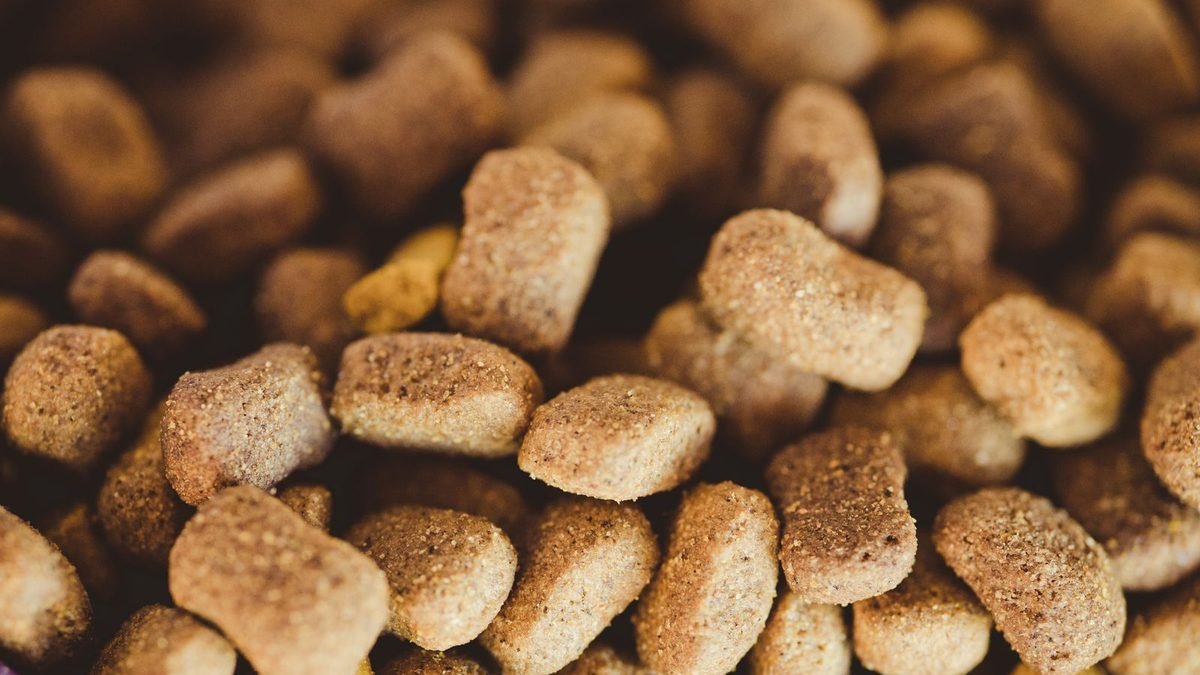
The clue was the label. Once I started reading ingredient lists, I could see why some foods caused trouble and others did not. The foods with long lists of peas, beans, and soy were the ones that always ended in a noisy night, so those are the ones I now avoid.
4. Table Scraps and Rich Treats
My dog has the face of an angel and the morals of a pickpocket, and for a long time, everyone in the house fed him from the table. A bit of fried chicken here, a spoonful of curry there, a biscuit meant for a human. Rich, fatty, spicy food is a shock to a dog’s gut, and his belly always paid for it a few hours later.
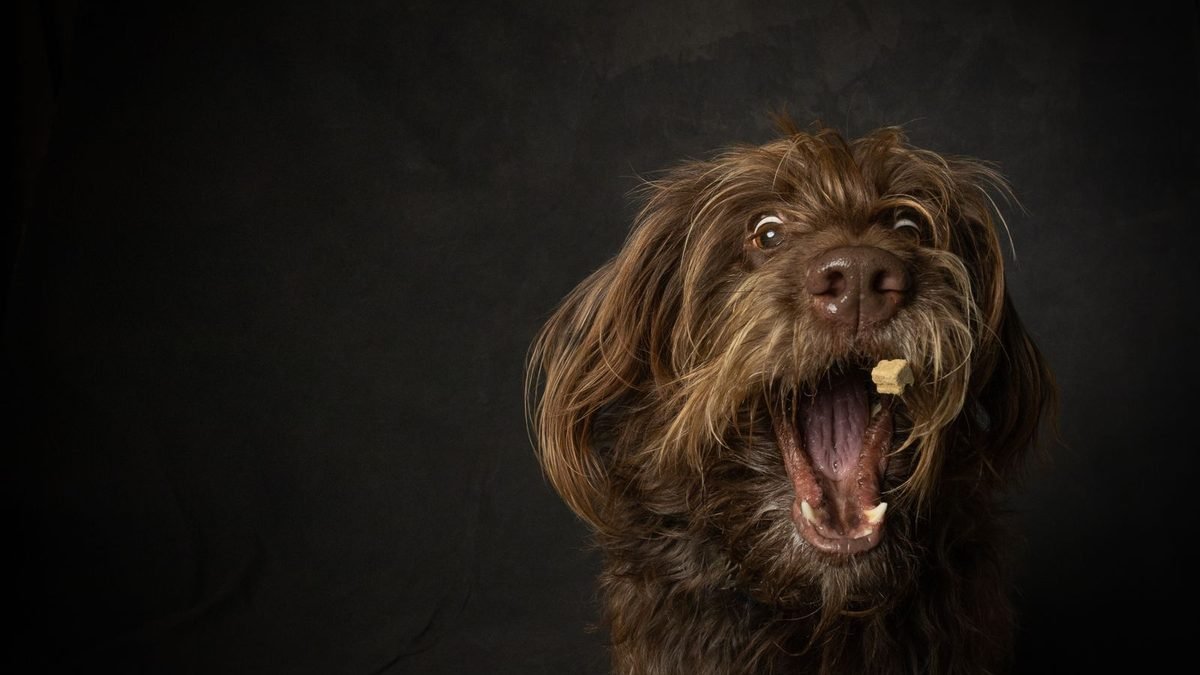
The clue was the guest list. The worst nights were always the nights we had people over for dinner. Once the scraps stopped, the gas dropped by half in a single week. That was the clearest result of the whole experiment, and the hardest rule to keep.
5. Food Sensitivities and Intolerances
Some dogs react badly to one ingredient, even in a good food. For many dogs, dairy is a classic — most adult dogs do not digest milk sugar well — and for others it is chicken, wheat, or beef. The reaction is not an allergy in the dramatic sense. It is a quiet, daily grumble: soft stools, gas, and a belly that never quite settles.
The clue was the pattern that never changed. Even on calm days with slow meals, the gas stayed. That told me the problem was inside the food itself, not just how fast he ate it. Sorting this one out took patience, careful notes, and a vet’s guidance, because guessing at ingredients on your own can leave a dog short of the nutrients he needs.
6. Stress, Excitement, and Rushed Mealtimes
Dogs swallow air when they are excited, not just when they eat fast. On the days when dinner came right after a noisy walk, a visitor arriving, or the children racing through the kitchen, my dog ate like he was afraid the bowl would disappear. The meal was a gulp, the air went down with it, and the evening paid the price.
The clue was the mood in the room. Quiet evenings with a calm house meant a calm meal and a calm belly. Chaotic evenings meant gas. Feeding him in a quiet corner, after a short rest, made more difference than I expected, and it cost nothing at all.
7. A Gut That Needs a Vet’s Look
Sometimes the cause is not the food or the speed at all. Worms, a gut infection, or another health problem can make a dog gassy and bloated for weeks, and no change of bowl will fix that. I learned this when a friend’s dog had gas that would not budge, and her vet found the real problem in one visit. It was a reminder that some causes live under the surface.
The clue is persistence. If the gas and bloating keep going for weeks, or if they come with weight loss, vomiting, diarrhoea, or a dog that seems dull and tired, that is not a feeding problem any more. That is a vet visit, and the sooner the better.
Eating Too Fast: The Cause I Almost Missed
Of all seven causes, this is the one I would bet on first if your dog is like mine. Fast eating is so normal to watch that you stop seeing it. The bowl goes down, the dog looks up, and you think he enjoyed it. What you are actually watching is a dog swallowing mouthfuls of air along with his dinner, and that air is the raw material of an evening of gas. That is why speed is the first thing I mention whenever someone asks me about dog gas and bloating causes prevention.
The fix was embarrassingly simple. I bought a slow-feeder bowl — the kind with ridges and bumps that force a dog to work around them. The first night, dinner took eight minutes instead of forty seconds. The gas that evening was half what it had been, and by the end of the week, it was barely there.
Tip: If you do not have a slow-feeder bowl yet, try scattering the kibble across a clean floor or a baking tray. It slows most dogs down straight away, and it costs nothing.
I also split his food into two smaller meals instead of one big one. A smaller meal means less air swallowed at once and less work for his gut. It felt like a tiny change, and it behaved like a big one — a small, practical piece of dog gas and bloating causes prevention that anyone can try tonight.
The Food Choices That Made It Worse — and the Ones That Helped
The food that caused the most trouble was the one with the prettiest bag. It was cheap, it was full of peas and soy, and my dog loved it. I loved the price. His belly did not love any of it. Every evening after that food, his stomach swelled and the room filled with gas that could clear a sofa.
The change that helped was not dramatic. I moved him to a simpler food with a short ingredient list, and I changed it over slowly — a spoonful more of the new food each day, over ten days. There was no miracle morning. There was just a slow, steady fading of the noise until one evening I realised the house had been quiet all night. That slow change was the heart of dog gas and bloating causes prevention for us.
Dog Gas and Bloating Causes Prevention: What Worked in Our Home
No single change fixed everything. It was the combination — slower meals, simpler food, calm feeding times, and a bit of gentle movement — that finally gave us quiet evenings. Here is the dog gas and bloating causes prevention routine that worked for us, in the order I would try it if I were starting again.
- Slow-feeder bowl or scattered kibble for every meal
- Two smaller meals a day instead of one large one
- Any food change made slowly, over a week or more
- No table scraps and no rich, fatty treats
- A calm, quiet spot for meals, away from the rush of the house
- A short, gentle walk after eating — never hard running straight after a meal
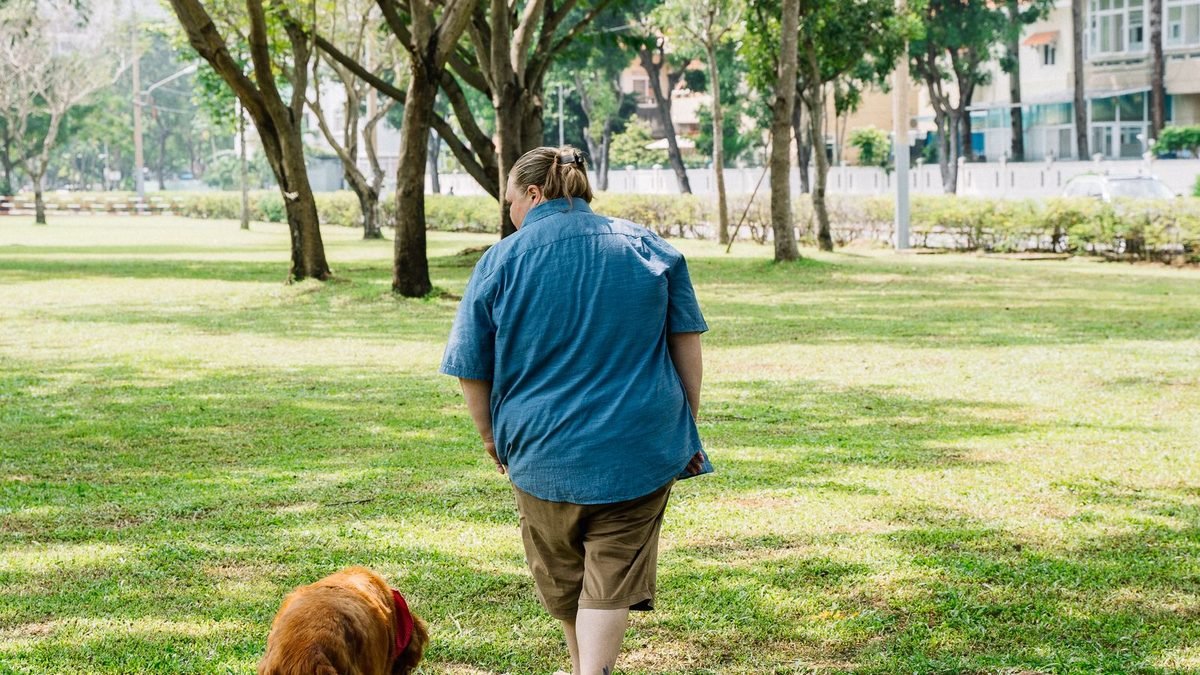
The walk deserves a special mention. A slow wander around the block after dinner seemed to help his belly settle. The rule I kept was simple: gentle walking, yes; racing, jumping, and rough play right after a meal, no. That walk became part of our dog gas and bloating causes prevention routine.
Key takeaway: Change one thing at a time and give it a week. If you change everything at once, you will never know which change actually helped.
What to Check First When Your Dog Is Gassy
Before you change anything, spend three days watching. Note what he eats, how fast he eats it, and how the evening goes. That little record will tell you more than any guide to dog gas and bloating causes prevention can, because it shows your dog’s pattern, not a generic one.
- How fast does he finish a meal? Time it.
- Did the food change recently, even to a new bag of the same brand?
- Did anyone give him table scraps or a new treat?
- Is his belly swollen, or just noisy?
- Is he still himself — eating, drinking, and happy to walk?
If the answer to that last question is yes, and the gas is the only problem, you have time to work through the causes above one by one. If the gas comes with loose stools, I wrote about that separately in Dog Diarrhea but Acting Normal, because the two problems often travel together.
What to Avoid
The list of things to avoid is shorter than the list of things to try, and most of it is common sense once you see it written down. Do not switch foods overnight. Do not feed from the table, however convincing the eyes are. Do not let your dog gulp a huge bowl of water straight after a meal, and do not let him race around or roll on his back right after eating.
I also stopped giving him bones and rawhide-style chews, which he used to gulp in large pieces, and I kept human foods like onions, garlic, and anything spicy far away from his bowl. A dog’s gut is not a small human gut. It has its own rules, and rich or spicy food breaks them.
Red Flags: When to Call the Vet Now
Most gas is a feeding problem, and feeding problems can be fixed at home. But some signs mean the vet, now — not tomorrow, and not after one more experiment. The most important one is bloat itself: a belly that swells quickly, feels hard as a drum, and comes with a dog that is retching or trying to vomit but cannot bring anything up.
- A belly that swells fast and feels hard, with restlessness or pacing
- Retching or trying to vomit without producing anything
- Drooling, panting, or a dog that cannot lie down comfortably
- A hunched back, a painful belly, or crying when touched
- Pale gums, weakness, or collapse
Bloat can turn serious quickly, especially in large, deep-chested dogs, and it is not something to watch and wait on. The American Kennel Club explains bloat and its warning signs in plain language, and it is worth reading before you ever need it. If you see the signs above, call your vet or an emergency clinic straight away.
Less urgent, but still worth a vet visit: gas and bloating that last more than two weeks, weight loss, vomiting, ongoing diarrhoea, or a dog that seems dull, tired, or off his food. Those are not feeding quirks. They are clues, and a vet is the person who can read them.
Our Evenings Now
These days, dinner takes eight minutes, the bowl has bumps in it, and the house is quiet by eight o’clock. My dog eats, wanders out for a slow walk with me, and then folds himself into his bed with a sigh that sounds like relief. Some nights there is still a small toot, and we both pretend it did not happen. That is normal. That is a dog.
What changed most was not his food. It was me. I stopped treating the gas as a joke and started treating it as information. His belly was telling me something every evening, and once I listened, the fix was mostly small, boring, and cheap: slower meals, simpler food, and a calmer house. That is what dog gas and bloating causes prevention comes down to — paying attention, and changing one small thing at a time.
Frequently Asked Questions
Is it normal for a dog to be gassy every day?
A little gas now and then is normal, especially after a rich meal or a new treat. Gas every single day, especially with a swollen belly or a restless dog, is not something to shrug off. It usually means one of the causes above is at work, and it is worth tracking for a week before you decide what to change.
Does a slow-feeder bowl really help with gas?
It helped us more than anything else. Slowing the meal down means less air swallowed, and less air swallowed means less gas. It will not fix a food sensitivity or a health problem, but if your dog eats like a vacuum cleaner, it is the cheapest experiment you can run. For us, the slow-feeder bowl was the simplest dog gas and bloating causes prevention step of all.
When should I worry about bloating?
Worry when the belly swells fast and feels hard, when your dog is retching without vomiting, drooling, or unable to settle. Those are the signs to call the vet about right away. Mild, slow swelling after a big meal that settles on its own is different — but if it keeps happening, still mention it to your vet.
If your evenings sound like mine used to, start with the notebook and the clock. Time the meal, write down what he ate, and change one thing at a time. That notebook is where dog gas and bloating causes prevention starts. You can find more of our dog care stories on the Happy Pet Cure blog, and if the gas comes with other symptoms, do not wait — your vet would rather hear from you early than late.
This article is for general information only and is not veterinary advice. Always consult a licensed veterinarian for your dog’s health.