

Introduction About (Dog Throwing Up Yellow Bile)
Seeing your dog throwing up yellow bile can be alarming for any pet owner. Often, this yellow liquid comes from bile in dog vomit, which is a digestive fluid that can irritate the stomach.
While occasional episodes may be harmless, frequent or repeated vomiting in dogs could indicate a deeper problem such as dog digestive problems, empty stomach vomiting, or even more serious conditions like pancreatitis in dogs.
Understanding why your dog vomits yellow and knowing when to seek help is essential for their health. This guide will walk you through causes, emergency signs, and steps to care for your dog safely and effectively.
Table of Contents
What Is Yellow Bile in Dogs and Why Does It Appear in Vomit?
Bile in dog vomit is a yellow-green fluid produced by the liver to help digest fats. When a dog’s stomach is empty, bile can irritate the stomach lining, leading to dog stomach irritation. This often causes morning vomiting in dogs or dog throwing up on empty stomach. Even healthy dogs sometimes vomit bile if they skip meals or eat too close to bedtime.
Other triggers include dietary indiscretion, sensitive stomach dogs, or systemic illness. Puppies and older dogs are more prone because their digestive system may not handle irregular meals well. Watching your dog’s behavior alongside the vomit’s color helps distinguish between normal and concerning vomiting episodes.
Is Dog Throwing Up Yellow Bile is an Emergency?
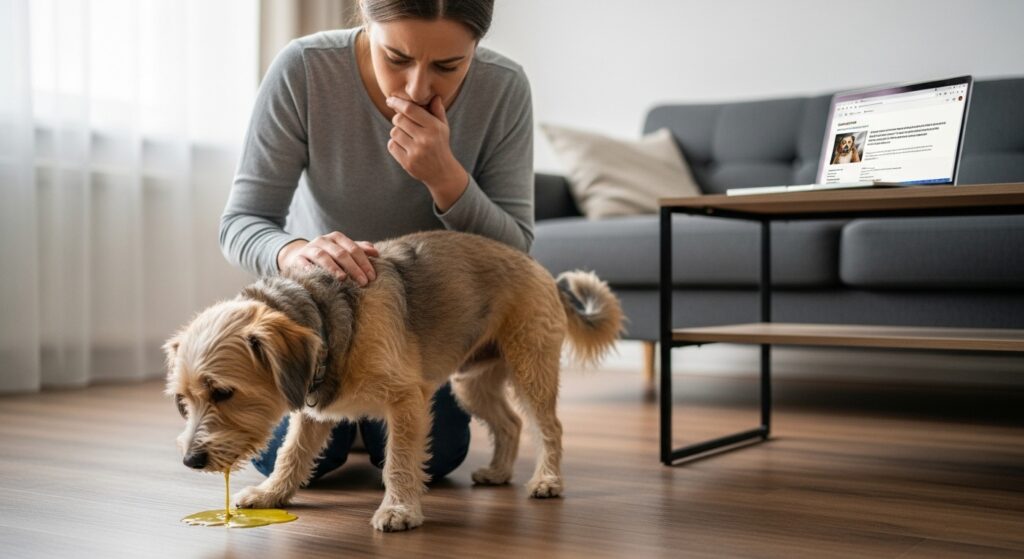
Not all cases of dog vomiting yellow liquid are emergencies, but repeated episodes or additional symptoms can signal danger. Repeated vomiting in dogs, dog abdominal pain, or dog showing signs of pain may require urgent attention. If your dog shows lethargy in dogs, low energy dog symptoms, or refusal to eat, call emergency vet care for dogs immediately.
Signs like blood in vomit, yellow dog diarrhea, swollen stomach in dogs, or hunched posture in dogs indicate more serious problems like bloat (gastric dilatation-volvulus) or stomach blockages. Always err on the side of caution. When in doubt, ask, “Is it an emergency if my dog vomits yellow?” — veterinarians can guide you.
Most Common Causes of Dog Throwing Up Yellow Bile
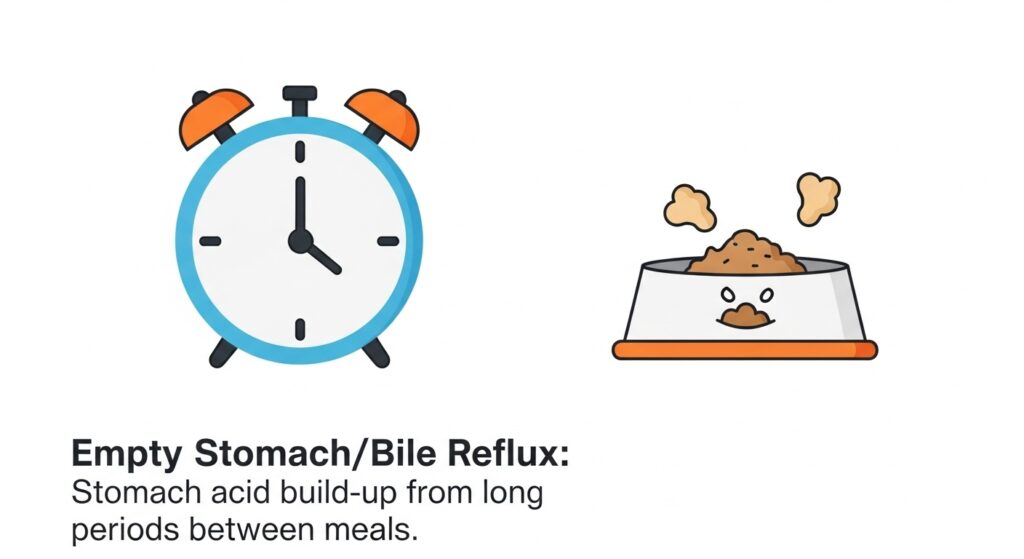
The most frequent cause of yellow vomit in dogs is empty stomach vomiting. Dogs may vomit bile early in the morning or after skipping meals. Hunger pukes in dogs usually stop after eating a small snack. Bilious vomiting syndrome (BVS) and indigestion are also common triggers for mild, non-threatening vomiting episodes.
Dietary mistakes or dietary indiscretion, like eating trash or spoiled food, can lead to dog vomiting bile. Even minor dog stomach irritation from new treats or sudden food changes may result in yellow vomit. Keeping a consistent schedule with small frequent meals for dogs often prevents these episodes.
Serious Medical Causes of Dog Throwing Up Yellow Bile Vomiting
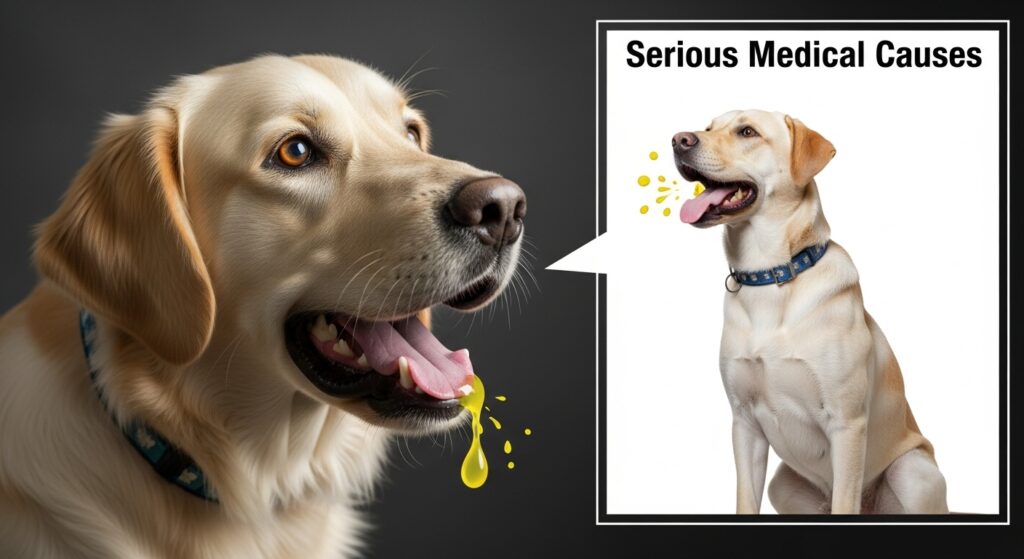
Sometimes, dog vomiting yellow liquid signals a serious condition. Pancreatitis in dogs often causes repeated vomiting, abdominal pain, and lethargy. Intestinal obstruction in dogs or stomach blockages can prevent food from moving properly, creating dog abdominal pain and dog vomiting bile.
Other serious conditions include liver issues in dogs, kidney issues in dogs, and systemic illness. Toxin ingestion, infections, or severe gastrointestinal irritation may also cause dog vomiting causes that need immediate intervention. Quick veterinary evaluation prevents life-threatening dog symptoms from worsening.
Signs Your Dog Throwing Up Yellow Bile Needs Immediate Vet Attention
Repeated vomiting in dogs, swollen stomach in dogs, or retching without vomiting are urgent signs. Watch for signs of dehydration in dogs, excessive drooling dog, hunched posture in dogs, or low energy dog symptoms. Puppies are especially vulnerable and can deteriorate quickly.
Other warning signs include blood in vomit, yellow dog diarrhea, refusal to eat, or dog showing signs of pain. If you see any of these, do not wait. Contact emergency vet care for dogs immediately to prevent complications like bloat (gastric dilatation-volvulus) or severe pancreatic inflammation.
What To Do Right Away When Your Dog Throwing Up Yellow Bile
First, assess the severity of vomiting and check for dog dehydration symptoms. Offer small sips of water, but avoid overfeeding or force-feeding. Withhold food temporarily until vomiting stops, then reintroduce a bland diet for dogs. Keep your dog calm and comfortable.
Call your veterinarian and gather dog health information including recent meals, vomiting frequency, and any toxin exposure. Preparing details beforehand allows a smooth vet visit and quick diagnosis. When asking yourself, “can I offer my dog water after vomiting?”, small controlled sips are safe if tolerated.
How to Settle Your Dog’s Stomach After Vomiting (Dog Throwing Up Yellow Bile)
After vomiting, hydration is key. Offer small amounts of water or ice chips frequently to prevent dog dehydration symptoms. Feeding a bland diet for dogs like boiled chicken and rice in small portions can ease dog stomach irritation. Rest and gentle care are essential to help recovery.
Avoid foods high in fat or sudden treats. Gradual reintroduction of normal meals prevents preventing dog vomiting again. For dogs prone to morning vomiting in dogs, consider bedtime snack for dogs to reduce bile buildup overnight. Monitoring symptoms ensures timely veterinary intervention if needed.
When to Call Your Veterinarian (and What to Expect)-Dog Throwing Up Yellow Bile
Contact your veterinarian if vomiting is repeated in dogs, involves blood, or is accompanied by dog showing signs of pain. Expect a physical exam, blood tests, and possibly imaging to check for stomach blockages or pancreatic inflammation. Sharing information about diet and vomiting frequency helps accurate diagnosis.
Your vet may discuss treatment options for dog vomiting yellow bile, including medications or dietary adjustments. Be ready to ask questions about dog vomiting causes, hydration strategies, and preventive measures for dog throwing up on empty stomach in the future.
Treatment Options for Dog Throwing Up Yellow Bile
Treatment depends on the cause. Mild cases respond to bland diet for dogs and small frequent meals for dogs, while pancreatic inflammation or intestinal obstruction in dogs may require hospitalization. Medications for nausea, stomach acid, or pain help manage dog stomach irritation.
For serious conditions, dog vomiting treatment may include surgery, IV fluids, or special diets. Recovery depends on accurate diagnosis and consistent care. Always follow veterinary guidance to prevent life-threatening dog symptoms from worsening.
Feeding and Care Tips Before Your Vet Appointment when Dog Throwing Up Yellow Bile
Keep meals light and bland. Feeding small portions frequently can reduce dog vomiting bile. Monitor water intake to prevent signs of dehydration in dogs. Note the time, frequency, and characteristics of vomit to help the vet.
Avoid giving medications or human foods, and never force-feed. Observation of your dog’s behavior, appetite, and energy levels allows better vet care for dogs and ensures quick intervention if dog digestive problems worsen.
How to Prevent Your Dog Throwing Up Yellow Bile Again
Preventive measures include adjust meal timing, feeding small frequent meals for dogs, and providing bedtime snack for dogs. Gradual diet changes prevent dog stomach irritation, and addressing food allergies in dogs reduces recurrent episodes.
Avoid stress or sudden dietary indiscretion. Keeping a consistent schedule and monitoring symptoms helps prevent future vomiting episodes. Teaching your dog slow eating habits can also lower dog throwing up on empty stomach incidents.
Managing Chronic or Recurring Dog Throwing Up Yellow Bile
Chronic vomiting may signal sensitive stomach dogs, intestinal obstruction in dogs, or ongoing systemic illness. Keeping a journal with vomiting frequency, diet, and dog dehydration symptoms helps identify patterns.
Your veterinarian may recommend dietary changes, medication, or further tests. Addressing triggers like dietary indiscretion, allergies, or stress is key. Long-term care reduces risk of life-threatening dog symptoms and improves overall health.
Special Considerations for Dog Throwing Up Yellow Bile
Puppies are more vulnerable to dog dehydration symptoms and can deteriorate quickly. Hunger pukes in dogs, immature digestive systems, and sensitive stomachs make puppy vomiting yellow bile a serious concern even if mild in adults.
Offer small water sips, withhold food temporarily, and follow a bland diet for dogs. Rapid veterinary assessment is often required if vomiting is repeated, or the puppy shows lethargy in dogs, swollen stomach in dogs, or refusal to eat.
Conclution (Dog Throwing Up Yellow Bile)
In summary, dog throwing up yellow bile is often caused by an empty stomach or mild digestive irritation, but it can sometimes signal serious issues like pancreatitis in dogs, stomach blockages, or liver problems in dogs. Observing your dog’s behavior, tracking repeated vomiting in dogs, and noting any dog dehydration symptoms helps you decide when to seek emergency vet care for dogs. Providing small frequent meals for dogs, a bland diet for dogs, and careful monitoring can prevent future episodes. Always consult your veterinarian if vomiting persists or worsens to ensure your dog stays healthy and safe.
FAQs (Dog Throwing Up Yellow Bile)
Should I be worried if my Dog Throwing Up Yellow Bile?
Occasional yellow vomiting may be harmless, often caused by an empty stomach, but repeated vomiting in dogs or signs like lethargy in dogs or dog dehydration symptoms require a vet visit.
How to stop vomiting yellow bile?
when your Dog Throwing Up Yellow Bile Offer small frequent meals for dogs, a bland diet for dogs, and small water sips. Avoid feeding immediately after vomiting and consult a vet if episodes continue.
What organ is associated with yellow bile?
The liver produces bile, which aids digestion, and the gallbladder stores and releases it into the digestive tract.
What color of vomit is most concerning?
Dark brown, red, or coffee-ground-like vomit can indicate blood, while yellow vomit in dogs with repeated vomiting, swelling, or pain needs urgent attention.
What foods trigger bile reflux?
Rich, fatty, or spicy foods, sudden diet changes, and table scraps can cause dog stomach irritation and bile reflux.
Helpful article, I have same problem with my dog