
This article is for general information only and is not veterinary advice. Always consult a licensed veterinarian for your dog’s health.
The first night my dog slept in a crate, I sat on the floor outside it at 2 a.m., listening to him bark at the dark. I had done everything the box told me to do, and none of it worked. Learning how to keep a dog from barking in a crate took weeks of small, patient changes, not one big fix.
My dog was not being stubborn. He was scared, and his barking was the only way he could say so. Once I understood his nighttime crate barking, his separation anxiety, and his need for a calm crate routine, everything changed. These are the tips that helped my anxious dog finally rest.
Key Takeaways
- Anxious crate barking is usually fear, not disobedience — comfort works better than correction.
- A den-like crate, a familiar scent, and the same wind-down every night do more than any single trick.
- Short, calm crate sessions beat long ones. Build up slowly and always end on a quiet note.
- Learning how to keep a dog from barking in a crate takes days to weeks, not one night — patience is the method.
- If barking comes with shaking, drooling, or escape attempts, ask your veterinarian for guidance.
Why Does My Dog Bark in the Crate When He Seems Fine Outside It?
For a long time, I thought my dog was barking to annoy me. He was not. Outside the crate he was a happy, easy dog. Inside it, he lost everything that made him feel safe: my voice, the room, the freedom to move away from a noise. A crate takes away a dog’s choices, and an anxious dog notices that at once. Once I saw the barking as worry instead of bad behaviour, I started fixing the right problem. That shift in thinking is the first step in how to keep a dog from barking in a crate, because you fix the worry instead of fighting the noise.
Most crate barking comes from a short list of causes: fear of being alone, a crate that feels like a trap, too much energy, or a real need like a toilet break. My dog barked worst on the nights I had rushed his bedtime or left the house in a hurry. I learned to check the simple things first, then work on the worry underneath. If your dog only barks at other dogs, that is a different problem — see our guide to why dogs bark at other dogs. Once you know the cause, learning how to keep a dog from barking in a crate gets much simpler.
How to Keep a Dog From Barking in a Crate When Anxiety Is the Cause?
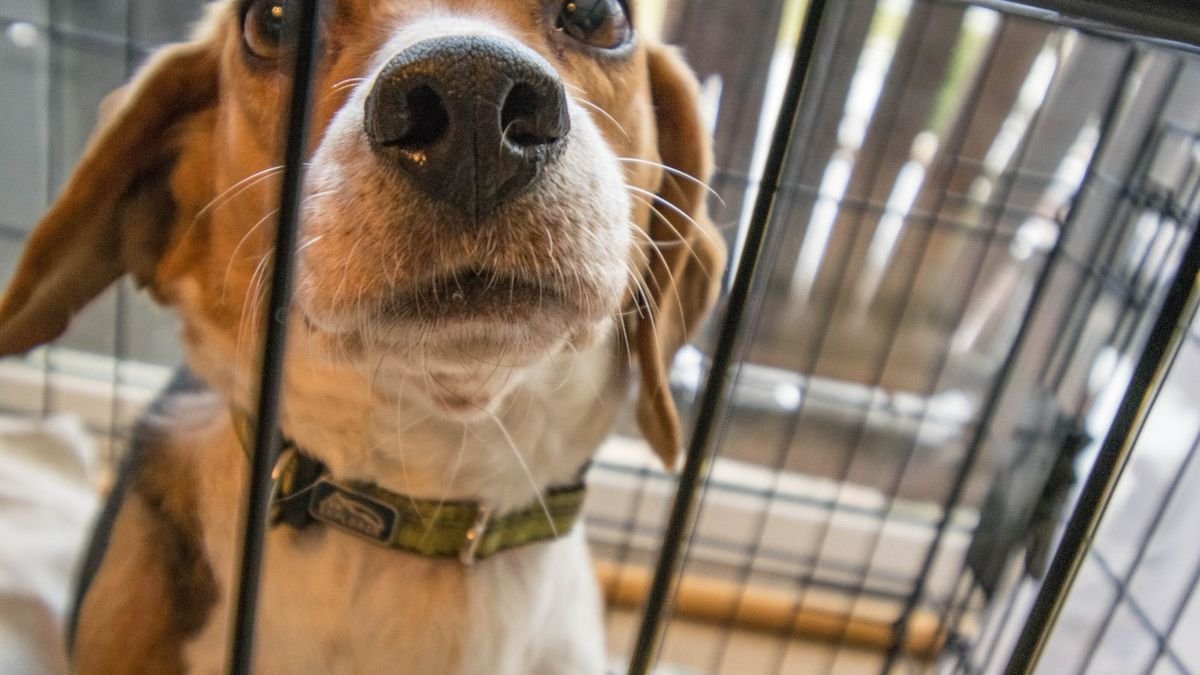
An anxious dog does not need a stricter crate. He needs a safer one. That was the hardest lesson for me, because everything in me wanted to fix the noise. But the noise was only the symptom. Underneath it was a dog who believed the crate meant being trapped and left. So I stopped trying to silence the barking and started trying to change what the crate meant to him.
I also had to accept that this would take time. My dog had spent weeks learning that the crate was a bad place, and one good evening would not undo that. So I worked in small steps, kept a notebook by the crate, and celebrated the quiet evenings instead of counting the loud ones.
How Can I Make the Crate Itself Feel Calmer?
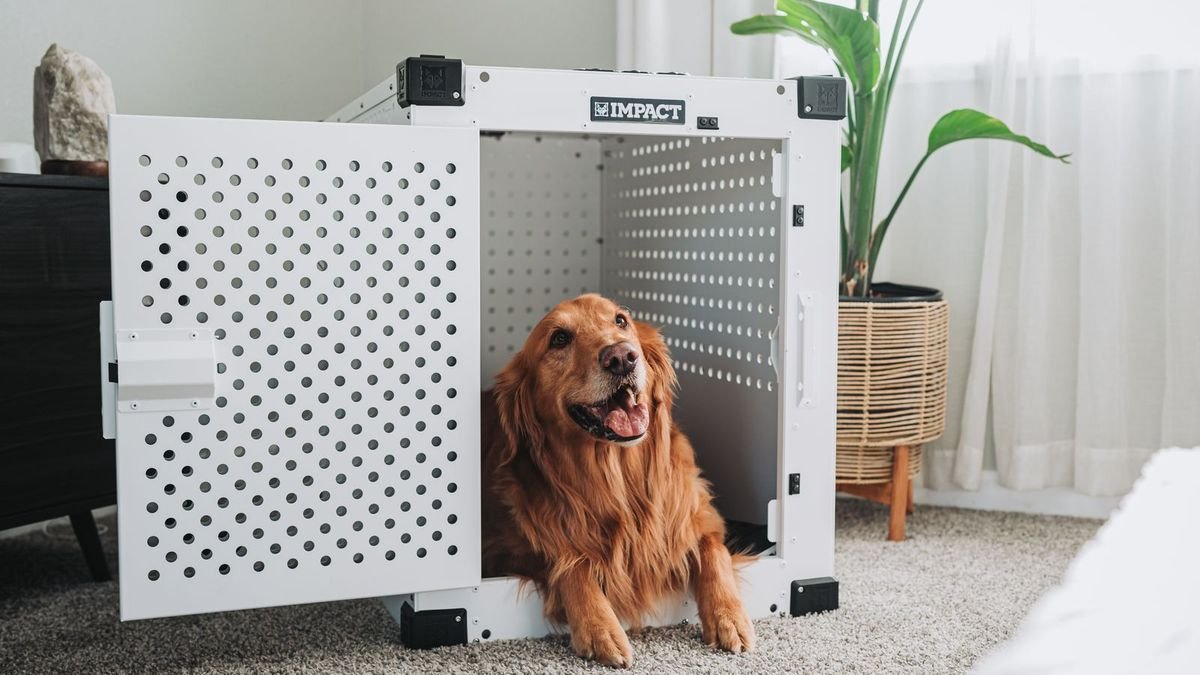
Before I changed anything about training, I changed the crate. My dog’s crate had been a bare wire box in a cold corner, and I was asking him to love it. No wonder he barked. A crate has to feel like a den: warm, a little dark, and full of good smells
I gave myself one day to fix the setup before I asked my dog to do anything new. I moved the crate into the living room, where he could hear us and smell dinner. I put in a proper mat he could push around, and I draped a light cover over the back half so it felt enclosed but not shut in. That night, for the first time, he walked into the crate on his own and lay down.
Tip 1: Turn the Crate Into a Den, Not a Cage
A dog’s wild ancestors slept in dens, and that instinct is still in your dog. A bare wire crate with a hard floor feels like a cage, not a den. I fixed that with three cheap things: a soft mat that covered the floor, a light blanket draped over the top and sides, and the crate placed against a wall in a room where my family actually spent time. I left the front uncovered so my dog could see out and air could move through.

Tip 2: Leave a Shirt That Smells Like You
My dog’s nose is his whole world, and my smell is his safest thing in it. On the second night, I put one of my worn T-shirts in his crate, unwashed, folded into a loose nest. He sniffed it for a long minute, circled once, and lay down on it. It was the first time he had settled without me sitting beside him. Learning how to keep a dog from barking in a crate became easier once I understood that my scent could stay in the room even when I could not.
Tip 3: Let Your Dog Choose the Crate First
The biggest mistake I made was closing the door on day one. My dog learned in a single evening that the crate was a trap, and it took me a week to undo that lesson. So I started again with the door tied open. I scattered a few treats just inside, then further back, and let him wander in and out as he pleased. I did not push him, call him, or shut the door behind him. Choice was the whole point: a dog who walks into a crate freely is a dog who is not afraid of it.
How Do I Build a Calm Routine Around Crate Time?
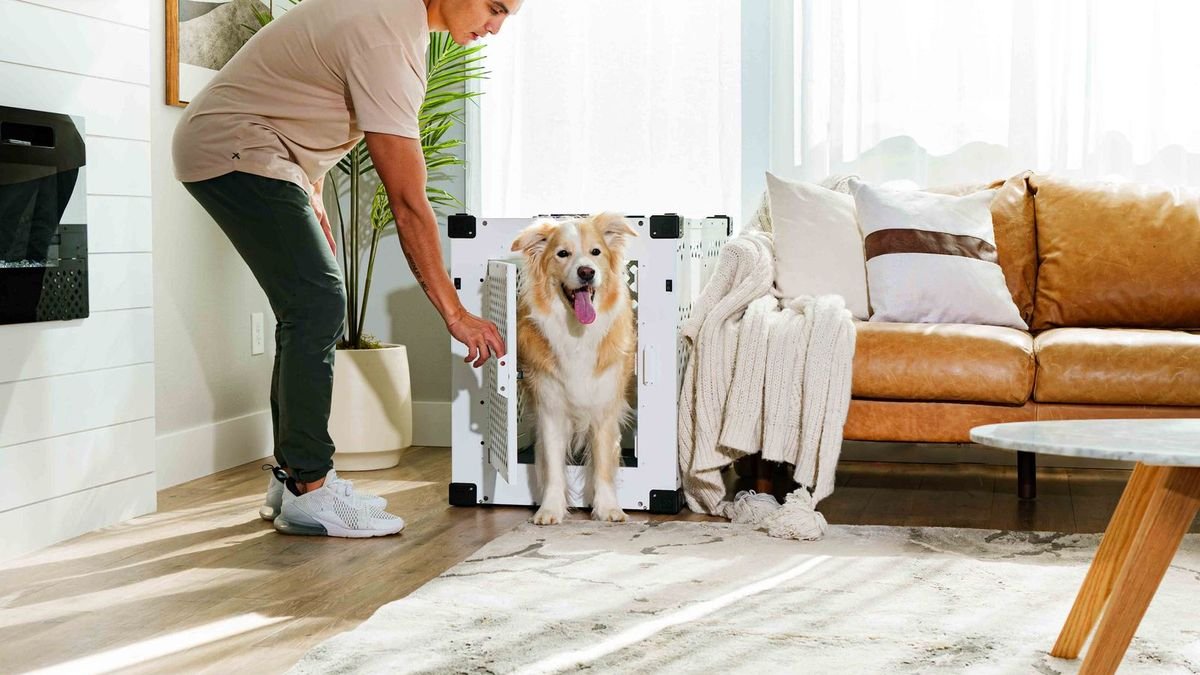
Anxious dogs live by the clock, even if they cannot read one. Mine knew exactly when bedtime was coming, and on the nights I changed it, he barked twice as long. Dogs feel safe when they can predict what happens next, and a crate is much easier to accept when it is part of a routine instead of a surprise
I wrote our evenings down on a card stuck to the fridge: last walk, last toilet trip, a small chew in the crate, lights low, same words, same order, every night. It felt silly for about three days. Then I noticed my dog starting to yawn when I picked up his lead for the last walk — he had learned the pattern, and the pattern told him that sleep was coming, not a surprise.
Tip 4: Serve Meals Inside the Crate
Food is the fastest way to change how a dog feels about a place. For a week, every meal my dog ate went into his crate. I put the bowl at the back, left the door wide open, and walked away. At first he stretched his neck in, grabbed a mouthful, and backed out again. By day four he was walking in and eating with his whole body inside. A dog who eats in his crate is starting to believe the crate is a good place — and a dog who believes that does not bark at it. That belief is the quiet foundation of how to keep a dog from barking in a crate.
Tip 5: Keep the Same Wind-Down Every Night
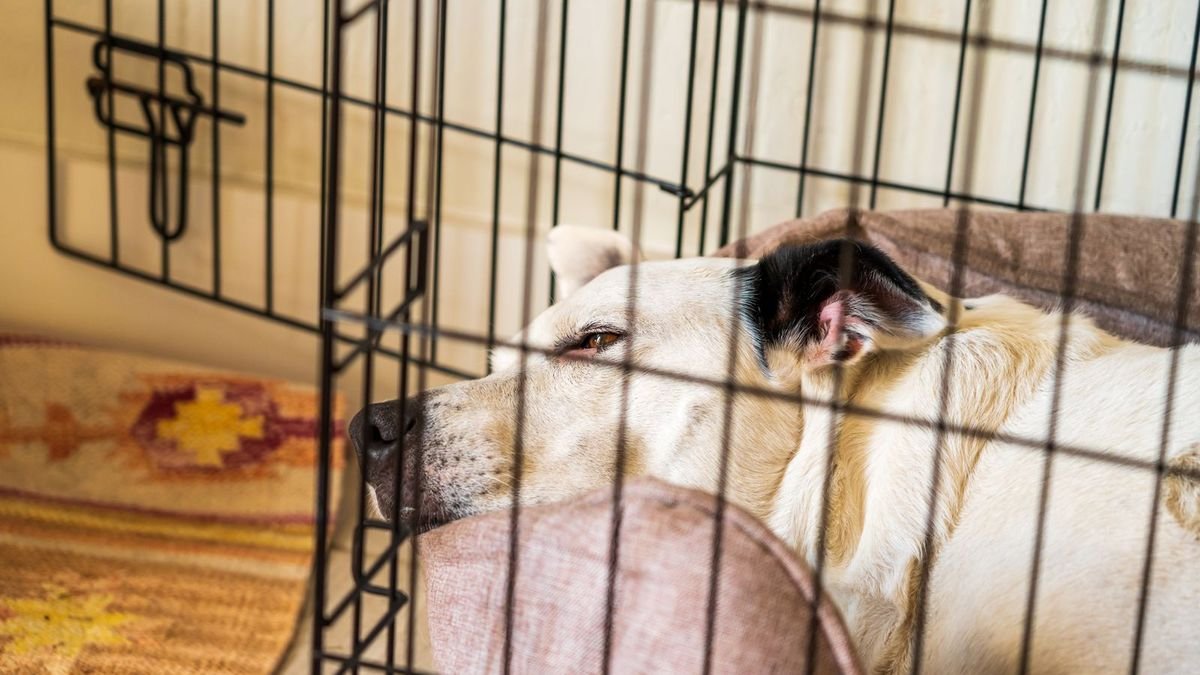
The hour before bedtime is where quiet nights are made. My dog’s wind-down became a small ritual: a gentle last walk, a toilet trip, then a calm chew in the crate while I dimmed the lights and spoke softly. I kept my voice low and my movements slow, and I did the same things in the same order every single night. When the pattern never changed, my dog stopped waiting for something bad to happen — and the barking at bedtime faded first.
Tip 6: Burn Off Energy Earlier in the Day
A tired dog settles. A bored dog barks. That was the plainest lesson of the whole month. Before any long crate session, my dog got a proper walk and a little play — not a marathon, just enough to take the edge off. I learned that the timing mattered as much as the walk itself: wild play right before bedtime wound him up, but a calm walk in the late afternoon left him ready to rest. Working out how to keep a dog from barking in a crate starts with the body, because a dog full of unused energy cannot lie still, no matter how comfortable his crate is.
What Helps an Anxious Dog Settle Once the Door Closes?
This is the hardest moment: the door clicks shut, and your dog realises he is on his own. Everything before this point was preparation. What happens in the first five minutes after the door closes decides whether the night is quiet or loud. My dog needed three things in those minutes: something to do, something to listen to, and the knowledge that I was still nearby. The three tips below cover exactly those three things, in that order.
I learned not to stand over the crate watching him. My hovering made him more nervous, not less — he could feel me waiting for the barking to start. So I sat down, picked up a book, and let the room go quiet. When he settled, I stayed put. When he fussed, I waited for a pause before I did anything at all. Calm is contagious, and the calmest thing in the room has to be you. Those first five minutes set the tone for how to keep a dog from barking in a crate all night.
Tip 7: Give Them a Calm Job to Do in There
An empty crate is a boring crate, and a bored dog barks. I started leaving a long-lasting chew or a food puzzle in the crate at bedtime — something that kept my dog’s mouth and brain busy for a while, so the door closing was not the main event. The trick was to use things he already knew how to use, nothing new or fiddly, and only things that were safe for him to have unsupervised. I gave it to him as he walked in, so the crate became the place where good things happened, not the place where fun stopped. Good things in the crate help with how to keep a dog from barking in a crate.
Tip 8: Mask the Noises That Set Them Off
My dog did not bark at nothing. He barked at the neighbour’s gate, the kettle, footsteps on the stairs — every small sound that said the house was still awake without him. So I gave him something steady to listen to instead. A white noise machine on low, or soft music playing quietly near the crate, covered the sharp little sounds that set him off. It did not need to be loud. It just needed to be constant, so the house sounded the same all night.
Tip 9: Stay Close at First, Then Drift Away
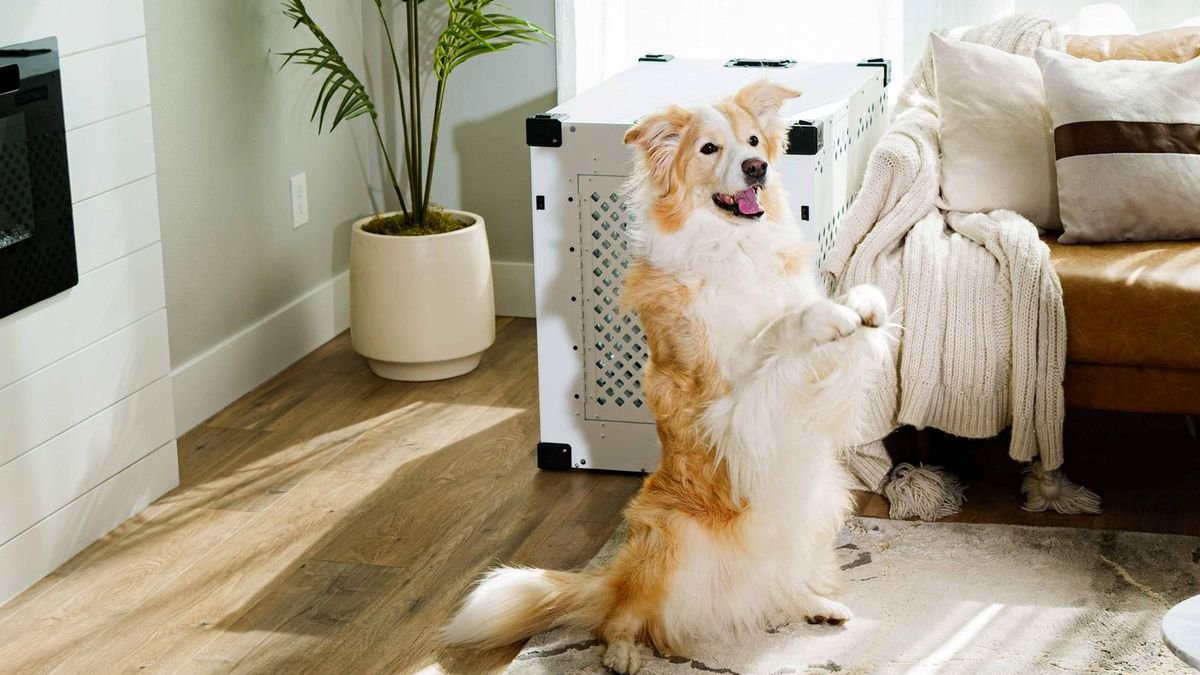
On the first nights, I slept on a mattress beside the crate. I know how that sounds, but it worked: my dog could hear me breathe, and I could hear him settle. Over the next week I moved the mattress a little further away each night — to the door, then to the hallway, then back to my own bed. He barely noticed, because the change was so small. This slow drift is the heart of learning how to keep a dog from barking in a crate when separation is the trigger: never go from right beside him to gone in one night.
How to Keep a Dog From Barking in a Crate at Night?
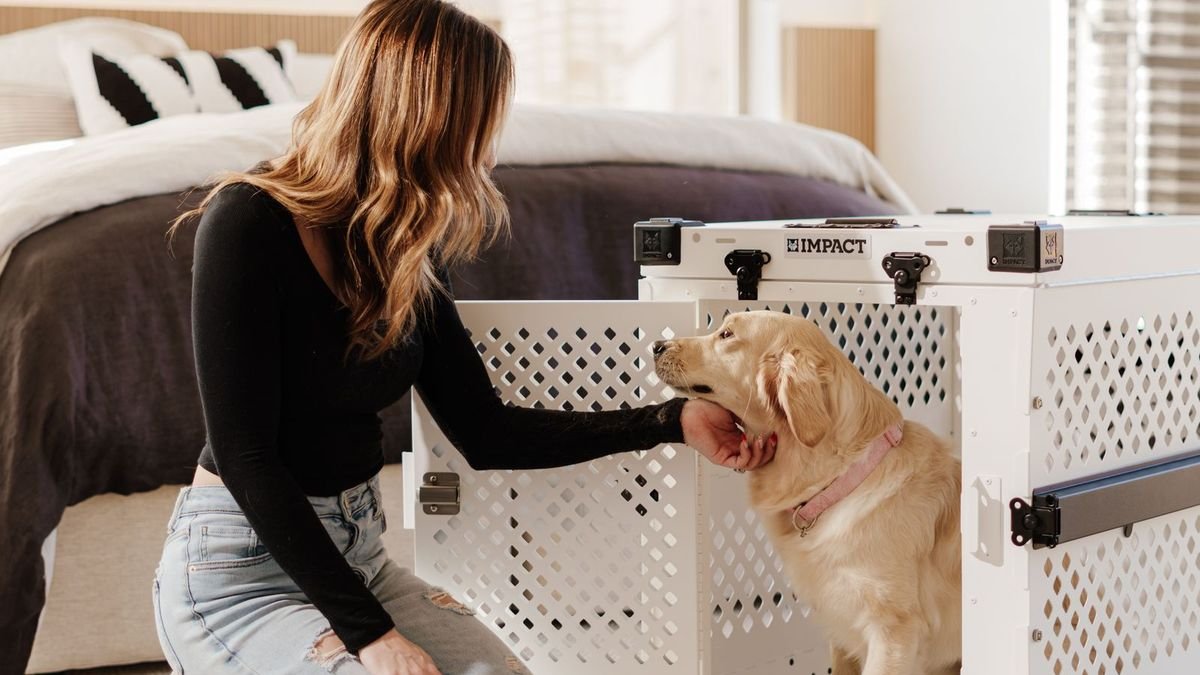
Night-time barking felt like a different problem from daytime barking, so I treated it that way. In the day, my dog could see me, hear the house, and know what was happening. At night, the house went dark and quiet, and his imagination filled the gaps. The night plan was simple: crate beside my bed, a calm bedtime routine, a low light, and a boring toilet break if he woke. Nothing exciting happened at night, and slowly he learned that night was for sleeping.
The toilet break matters more than people think. If my dog woke and barked in the small hours, I took him out on the lead, no talking, no playing, straight back to the crate. Boring on purpose. Within a few nights he stopped waking for attention and only woke when he genuinely needed to go out — and then he settled again at once, because the crate had become the place where sleep happened.
Tip 10: Practise Tiny Absences Before Big Ones
Separation anxiety does not improve in one big leap. It improves in tiny steps that are almost too small to notice. I started by stepping out of the room for ten seconds while my dog was settled in his crate, then coming straight back, calm as anything. Then thirty seconds. Then a minute, then two, then out of the front door and back in. Each step was so small that he barely registered it — and that was the point. He was learning that I always came back, one small absence at a time. Small absences are the safest way to practise how to keep a dog from barking in a crate.

Tip 11: Reward the Quiet Moments, Not the Noise
This tip changed everything for us, and it is the simplest one in the guide. I stopped watching for barking and started watching for quiet. The moment my dog lay down, sighed, or simply stopped fussing for a few seconds, a small treat dropped quietly through the bars. I did not make a fuss, call his name, or open the door — I just rewarded the quiet while it was happening. Dogs repeat what pays off, and within days he was offering me quiet moments on purpose. That is the whole secret of how to keep a dog from barking in a crate: pay for the quiet, not the noise.
Tip 12: Make Hellos and Goodbyes Boring
Dogs take their emotional temperature from us. When I left the house, I used to kneel down, hug my dog, and say goodbye in a sad voice — and then I wondered why he panicked the moment the door closed. I was telling him something terrible was about to happen. So I changed it. Now I put him in his crate with a chew, say one calm word, and walk out without looking back. When I come home, I ignore him for a minute, then greet him quietly once he is calm.
Boring is kind. A dog who sees you leave without drama learns that leaving is ordinary, and ordinary things do not need barking at. For the day-by-day training order behind these calming tips, see our 9-step crate training guide.
What About Puppies Barking in the Crate on Their First Nights?
A puppy’s first nights are the hardest, because everything is new. My puppy had left his mother, his littermates, and every smell he knew, and then we asked him to sleep alone in a wire box. Of course he cried. For the first three nights, I slept on a mattress beside the crate, and I kept his daytime crate sessions very short. Puppies need the same calm approach as older dogs learning how to keep a dog from barking in a crate — only slower, gentler, and with more toilet breaks.
Keep the bedtime routine the same every night: last toilet trip, a small chew in the crate, the same words, lights low. Expert Tip: Put a ticking clock wrapped in a towel near the crate for the first few nights — the steady sound can comfort a puppy who misses sleeping pressed against his littermates. The same patience that helps older dogs learn how to keep a dog from barking in a crate works for puppies too — just slower.

Which Calming Technique Works Fastest?
Not every tip works at the same speed, and that is normal. Some changes help on the first night, and some take weeks of small steps. The table below is the honest version of what I saw with my own dog — use it to pick where to start, not as a promise. If you are working out how to keep a dog from barking in a crate and you need one quick win tonight, start with the den setup and the familiar scent.
The slow techniques are the ones that last. A chew keeps a dog quiet for an evening; tiny absences teach a dog that being alone is safe for good. Do the quick wins first to get some sleep, then keep doing the slow ones.
| Technique | Best for | How long it usually takes |
|---|---|---|
| Den-like crate setup | Dogs who panic at the door | First night |
| Familiar scent | Dogs who settle when you are near | Same evening |
| Predictable wind-down | Night-time barking | A few nights |
| Calm chew or food puzzle | Restless, bored barkers | Minutes, each session |
| Tiny absences | Separation anxiety | Days to weeks |
Frequently Asked Questions
These are the questions I get asked most about anxious dogs and crate barking, and the answers I give now, after living through it.
If your dog’s barking comes with shaking, drooling, or frantic escape attempts, talk to your veterinarian before you keep training — some dogs need professional help, and that is nothing to be embarrassed about.
How do I stop my dog from barking in the crate?
Start by finding the cause, not the cure. Check the basics first — toilet, water, heat, and time in the crate — then work on the worry underneath. Learning how to keep a dog from barking in a crate means making the crate feel safe: a den-like setup, a familiar scent, the same wind-down every night, and short, calm sessions that build up slowly. Reward the quiet moments and never let your dog out mid-bark.
Should you ignore a dog crying in a crate?
Not always. Short, mild fussing from a dog who is settling in can be left alone — rushing over teaches him that noise brings you running. But crying that means a real need, like a toilet break, should never be ignored, and neither should panic. If your dog is shaking, drooling, or hurting himself trying to escape, let him out and speak to your veterinarian. That judgement call is part of how to keep a dog from barking in a crate without teaching him that noise always brings you running.
Does covering a dog crate help with barking?
For many dogs, yes. A light cover over the top and sides makes the crate feel more like a den and blocks out some of the sights and sounds that set a dog off. Leave the front uncovered so air can move and your dog can see out, and never cover a crate completely in hot weather. If your dog paws at the cover or seems hotter, take it off. A den-like cover is one of the simplest parts of how to keep a dog from barking in a crate, as long as air can still move freely.
How long will a dog bark in its crate before it stops?
It depends on the dog, the cause, and how steady you are. With a calm routine and short, patient sessions, many dogs settle within days to a few weeks. Anxious dogs take longer, and that is normal. If the barking is getting worse instead of better after a couple of weeks, go back a step — or two — and slow down.
Why does my dog only bark in the crate at night?
Night is when the house goes quiet and your dog is alone with his thoughts. Daytime barking is often about energy or boredom; night barking is usually about worry. Keep the crate beside your bed at first, use the same wind-down every night, and give a boring toilet break if he wakes. Dogs who learn how to keep a dog from barking in a crate at night usually do it because the nights became predictable, not because they were punished into silence.
Sources and Further Reading
For the training side of crate work, the American Kennel Club’s step-by-step crate training guide explains how to introduce a crate, close the door, and build up time inside. The RSPCA’s guide to playpen and crate training a puppy covers the same ground from a welfare angle, including why a crate should be a safe haven and never a punishment.
On this site, our 9-step crate training guide walks through the day-by-day training order behind the calming tips above, and our guide to why dogs bark at other dogs explains a different kind of barking — the kind that happens on walks, not in crates.
A Calmer Crate Starts With a Calmer Dog

I still remember that first night on the floor at 2 a.m., and I still remember the first quiet morning after it. The change did not come from one trick. It came from a warmer crate, a shirt that smelled like me, the same small routine every night, and the patience to build up in tiny steps. Learning how to keep a dog from barking in a crate taught me something I did not expect: my dog was never the problem. He was asking for help in the only way he knew how.
If you are sitting on the floor tonight listening to the barking, start tomorrow with Tip 1 and Tip 2 — fix the crate, add your scent — and give each change a few days before you judge it. Your dog wants to settle. Give him a crate that feels safe, a routine he can trust, and a little patience, and he will get there.
This article is for general information only and is not veterinary advice. Always consult a licensed veterinarian for your dog’s health.