
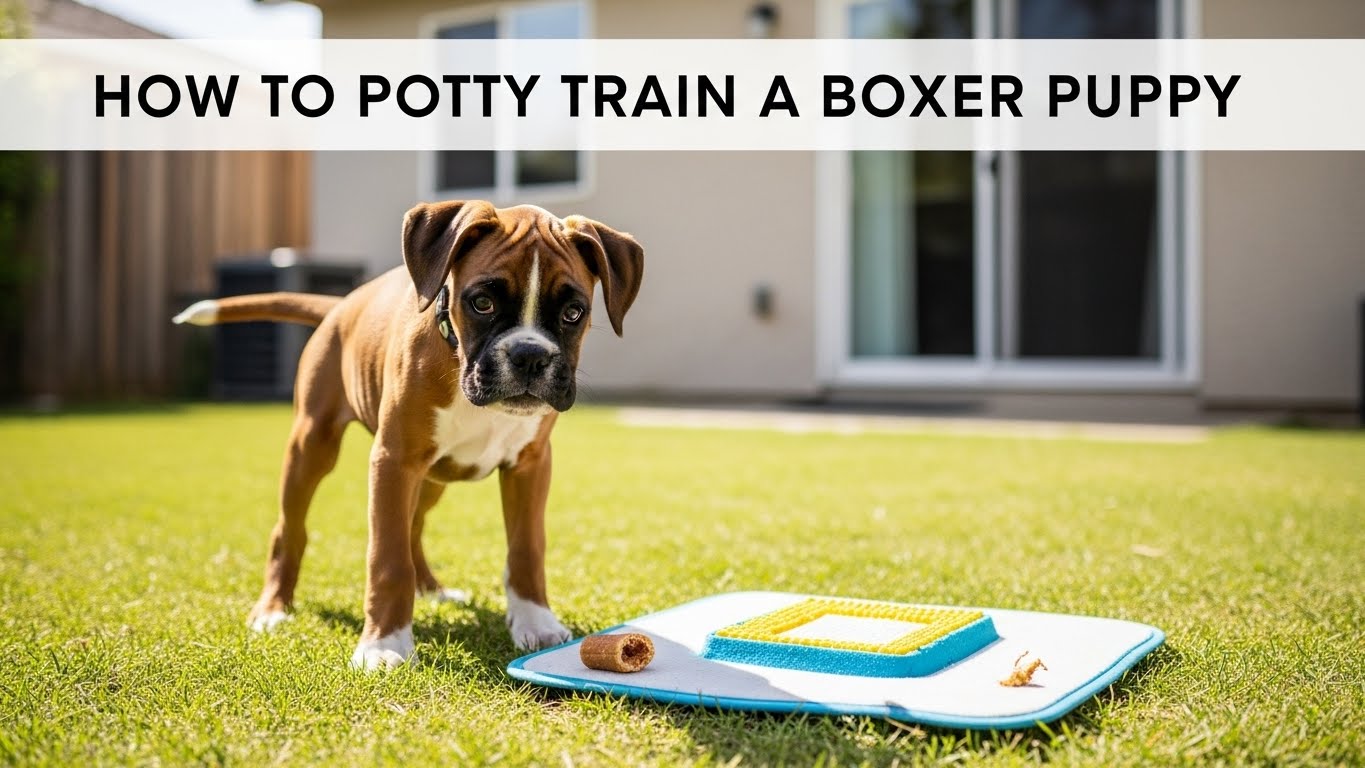
If you are searching about How to Potty Train a Boxer Puppy can feel challenging, especially for new dog owners who are still learning their puppy’s habits and daily needs. Understanding early routines, bladder limits, and behaviour signals makes Boxer puppy potty training much easier and helps your puppy learn faster.
A clear schedule, gentle guidance, and a calm environment also prevent confusion during Boxer puppy toilet training and support healthy growth. Many beginners struggle with accidents, timing, and choosing a designated potty spot, but the right method creates quick progress. By watching sniffing and circling signs and following a steady potty training routine, you can teach your Boxer puppy to stay clean and confident.
Table of Contents
Understanding Boxer Puppy Potty Training Basics
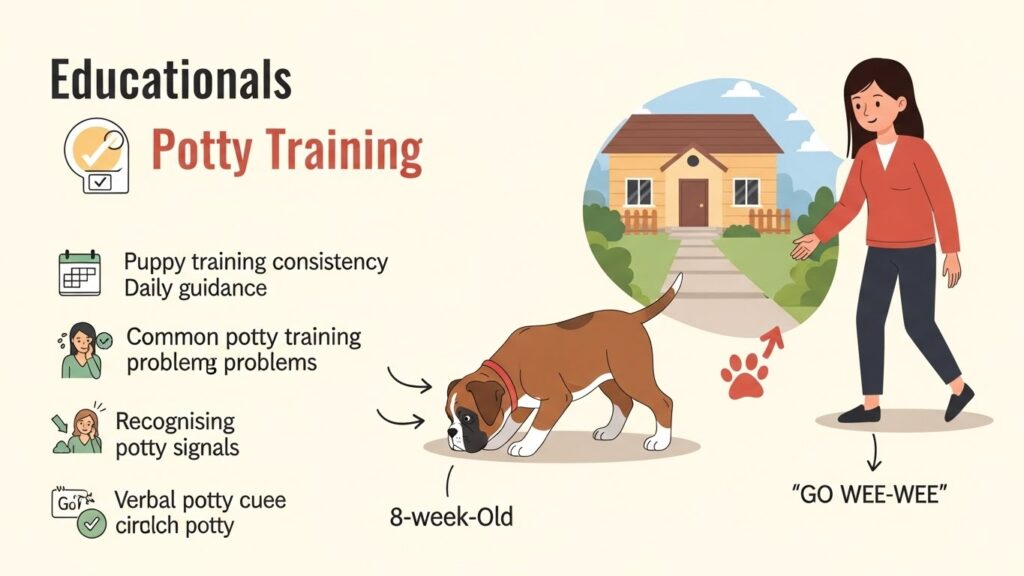
Training begins the moment your puppy arrives home. Young Boxers do not know where to pee or poop, and they rely on you to show them the correct place through boldpuppy training consistencybold and daily guidance. A puppy at eight weeks has very weak puppy bladder control, so frequent outdoor potty breaks are important during the early weeks. Many owners worry about boldcommon potty training problemsbold, but early mistakes are normal. Patience, observation, and routine help your puppy succeed.
Boxer puppies often show sniffing and circling signs right before they eliminate. Spotting these signals is important for boldrecognising potty signalsbold, especially when your puppy is new to the house. When you respond quickly and guide your puppy to the designated potty spot, he learns faster. You can also use a short phrase such as a boldverbal potty cue (e.g., “Go Wee-Wee”)bold, which teaches your puppy what you expect. Over time, your Boxer will link the cue to the action and develop clear puppy elimination patterns.
When to Start Potty Training a Boxer Puppy
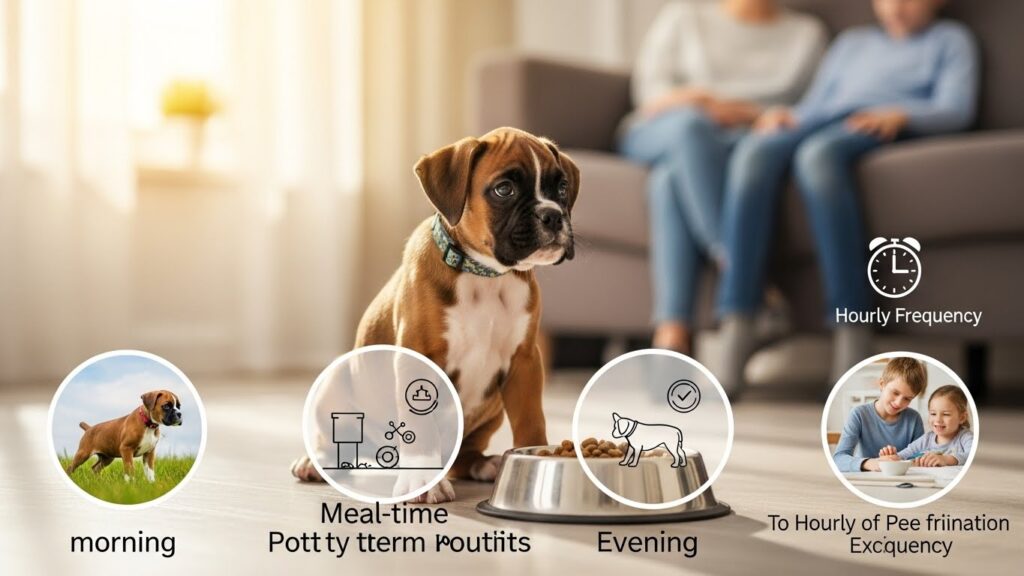
Most experts recommend starting at seven to eight weeks of age. This is when a Boxer puppy begins forming long-term habits and can follow simple routines. At this age, your puppy is ready for a gentle potty training schedule that includes morning trips, meal-time trips, and evening routines. Starting early helps reduce confusion and prevents the puppy from developing long-lasting puppy toilet habits indoors.
Training becomes easier when you pair a feeding schedule and potty breaks together because puppies usually need to go shortly after eating. Understanding puppy pee frequency is also useful. Very young Boxers may need to go every hour, but as they grow older, the interval becomes longer. Keeping a calm home environment also helps reduce boldpuppy excitement urinationbold, which can happen during greetings or play.
Essential Items for Potty Training Success
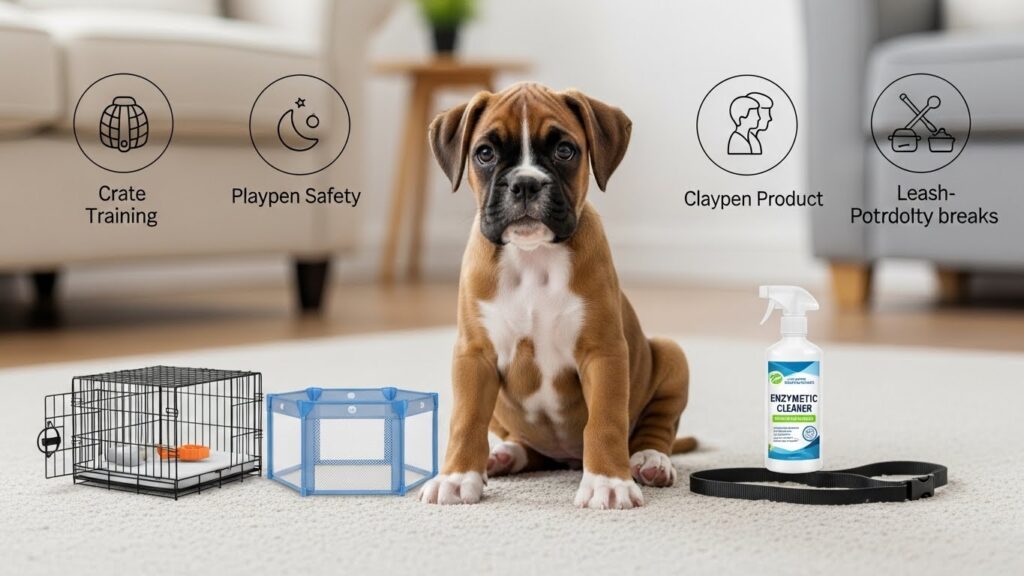
New owners benefit from a small set of tools that make training smoother. One key item is a crate for safe sleeping, also known as crate training for Boxer puppies, which encourages tidy habits and supports night-time learning. Another helpful item is an enzymatic cleaner for dog urine, which removes scent completely so your puppy does not return to the same indoor area. These cleaning products work far better than regular cleaners.
Many owners also use a puppy playpen setup during the day. This creates a safe zone that prevents roaming and reduces Boxer puppy accidents while still allowing the puppy to see the family and rest comfortably. A playpen also makes it easier to monitor puppy toilet habits and respond in time. For outdoor learning, a simple leash is important for leash-guided potty breaks, ensuring your puppy reaches the same spot every time.
Table: Items That Help Boxer Puppy Potty Training
| Item | Purpose |
|---|---|
| Crate | Supports safe sleep and teaches bladder control |
| Enzymatic cleaner | Removes urine smell and prevents repeat accidents |
| Leash | Guides puppy to a single outdoor spot |
| Playpen | Controls indoor movement and reduces accidents |
| Treat pouch | Helps with rewarding good behaviour |
Setting Up a Boxer Puppy Potty Training Routine
A reliable routine is the heart of all Boxer puppy potty training methods. A schedule teaches your puppy what to expect each day and prevents confusion. For example, the puppy should go outside right after waking, after eating, after playing, and before sleeping. As your puppy learns the rhythm, you will notice fewer accidents and stronger bladder control. Boxers respond very well to predictable patterns, which is why consistency matters.
During the routine, always take your puppy to the same designated potty spot. This helps reinforce familiarity and reduces wandering. When your puppy eliminates outside, praise warmly and offer treats as part of boldrewarding good behaviourbold. Over time, this becomes a strong habit known as boldpuppy training reinforcementbold. This type of routine also prevents potty training mistakes, which often happen when owners delay outdoor trips or allow too much freedom too early.
Night-Time Potty Training for Boxer Puppies
Night-time requires special care because puppies cannot hold their bladder for long. Placing the crate near your bed helps the puppy feel safe, reduces crying, and makes it easier for you to hear when they need a break. Keeping night hours calm is vital for boldkeeping night-time calmbold, and your puppy should return to sleep quickly after an outdoor trip.
Night accidents are common during early weeks, but responding gently prevents stress. Many owners make the mistake of scolding, but boldavoiding punishment during trainingbold is important because punishment slows learning and creates fear. Use a quiet voice, take your puppy to the grass, and guide him with leash-guided potty breaks. With time, your puppy will naturally sleep longer as bladder capacity increases.
Understanding Puppy Behaviour and Potty Signals
Boxers are expressive and energetic, so understanding their body language helps prevent Boxer puppy accidents. Signals include staring at the door, whining, stopping play suddenly, restless pacing, or classic sniffing and circling signs. Responding quickly helps shape reliable puppy elimination patterns and reduces the need for indoor clean-ups.
Some puppies may show frequent small urination, which could be behavioural or sometimes medical. Always monitor changes, especially if your puppy looks uncomfortable or urinates more than usual.
If you suspect health issues, check for bladder infection symptoms in puppies, such as licking the genitals, cloudy urine, or crying during urination. In such cases, treating UTI in puppies with proper veterinary care is necessary. A healthy puppy learns faster and responds better to training, so do not ignore sudden behavioural changes.
How to Handle Accidents Indoors
Accidents will happen, especially during early weeks of early-stage potty training challenges. When they occur, stay calm and guide your puppy outside immediately. Never shout or use punishment. Instead, use an enzymatic cleaner for dog urine or strong pet mess cleaner to remove scent and prevent your puppy from returning to the same spot. Proper cleaning prevents developing negative habits and supports long-term learning.
If your puppy begins puppy toileting indoors frequently, review your schedule and ensure enough outdoor time. Many accidents happen because young Boxers are distracted or overstimulated. Gently redirecting your puppy and reinforcing calm behaviour can prevent what to do if puppy regresses moments. Regression is normal and part of the learning process.
Crate Training and Playpen Training for Potty Success
Crate training creates a safe sleep zone and teaches natural cleanliness. Puppies avoid soiling where they sleep, which helps build strong puppy bladder control. Crates also help with nighttime routines and reduce exposure to accidents. Always make the crate comfortable and never use it for punishment. You can also combine the crate with a puppy playpen setup for daytime safety.
Playpens help during unsupervised moments. Since Boxers are energetic, limiting movement reduces the chance of accidental elimination. A playpen also helps maintain structure, especially when paired with consistent schedules and outdoor potty breaks. Using a mix of crate, playpen, and leash makes your training controlled, safe, and gradual.
Boxer Puppy Surface Training
Some puppies become confused when surfaces change. Puppy surface training (grass, gravel, sand) teaches your Boxer to eliminate on different textures. This is useful for travel, walks, and future adult behaviour. Begin by introducing one surface at a time, usually grass, then slowly expose your puppy to other areas.
Surface training also helps reduce anxiety and prevents picky habits. Some puppies develop preferences for carpets or soft surfaces, leading to indoor accidents. Teaching them to eliminate outdoors on multiple surfaces prevents long-term issues and makes outdoor potty sessions predictable and easier.
Common Potty Training Problems
Every Boxer owner deals with setbacks at some point. Common issues include puppy excitement urination, indoor marking, distractions outside, and sudden refusal to go. Sometimes puppies regress when teething, changing routines, or experiencing stress. Understanding boldwhat to do if puppy regressesbold is important. Return to basics: more supervision, more outdoor time, and immediate rewards after successful elimination.
Medical conditions sometimes look like behavioural issues. If your puppy urinates many times in small amounts or looks uncomfortable, check for bladder infection symptoms in puppies and get treatment quickly. Healthy puppies learn far better and respond reliably to cues and routines.
Table: Common Potty Problems and Solutions
| Problem | Cause | Solution |
|---|---|---|
| Excitement urination | Overstimulation | Keep greetings calm |
| Regression | Stress or routine change | Return to short training sessions |
| Frequent urination | Possible UTI | Veterinary check-up |
| Indoor accidents | Inconsistent routine | Strengthen schedule |
| Refusing outdoors | Distraction | Use leash-guided trips |
Positive Reinforcement and Adult Behaviour Development
Boxer puppies grow into confident adults when trained with kindness. Using positive reinforcement training helps your puppy learn faster and trust you. Every success outdoors should be followed by praise, snacks, or affection as a way of rewarding good behaviour. Boxers enjoy approval, and this method builds strong habits.
As your puppy matures, you will notice fewer accidents and stronger patterns. Continue guiding, praising, and adjusting routines. If needed, join a Boxer Training Club support group or use structured lessons such as a Baby Boxer Puppy Course. Community guidance can solve stubborn issues and teach better supervision methods.
Final Thoughts: How Long Potty Training Really Takes
Many owners want to know how long potty training takes. The answer varies based on age, routine, health, and consistency. Some Boxer puppies learn basic habits within two weeks, while others need several months for full reliability. The key is steady improvement, gentle supervision, and regular outdoor potty breaks.
A calm home, a clear routine, and daily encouragement will help your Boxer grow into a clean, confident adult. With patience, your dog will master puppy eliminating outdoors, form stable habits, and learn a lifelong toilet routine.
FAQs
How long does it take to toilet train a Boxer puppy?
It usually takes 3–6 months to fully toilet train a Boxer, depending on age, consistency, and routine. Watching signals and keeping a steady schedule helps speed progress. The key is following How to Potty Train a Boxer Puppy steps every day.
How to stop Boxer from peeing in the house?
Set a strict routine, supervise closely, and take your Boxer out often to prevent indoor accidents. Clean old spots with an enzymatic cleaner to remove scent cues. Using How to Potty Train a Boxer Puppy guidelines creates fast improvement.
What is the fastest way to potty train a puppy?
Use frequent outdoor trips, reward immediately, and keep a predictable routine. Stay consistent with feeding and potty times. The fastest results come from applying How to Potty Train a Boxer Puppy methods correctly.
What is the 3-day potty training trick?
For three days, supervise nonstop, take the puppy out every hour, and reward instantly after they go. Keep them near you to catch every signal. It works best when combined with How to Potty Train a Boxer Puppy techniques.
What is the fastest way to potty train?
Take your puppy out often, use one potty spot, and praise after every success. Limit freedom indoors so accidents don’t build habits. Following How to Potty Train a Boxer Puppy routines ensures the quickest housebreaking results.