
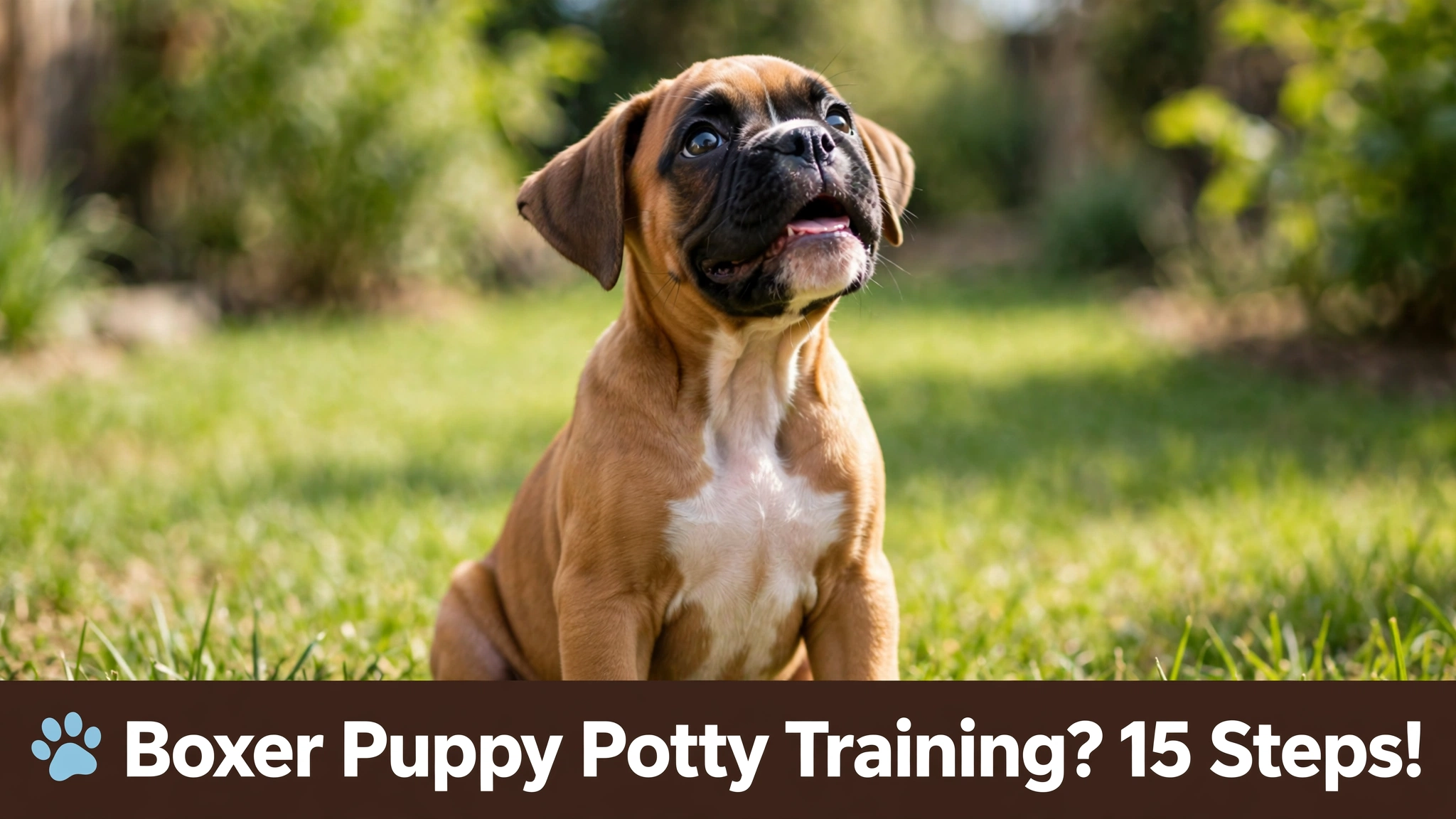
If you are searching for How to Potty Train a Boxer Puppy, I know exactly how that first week feels. Our Boxer puppy arrived full of bounce and joy, and within a day I had mopped the same kitchen floor more times than I could count. I kept wondering what I was doing wrong, and whether every new owner felt this lost. The good news is that it gets easier fast once you have a clear plan.
Our puppy was not being naughty. He was young, excited, and still learning that the garden was the toilet and the rug was not. Boxers are clever and eager to please, but they are also easy to distract, and a butterfly or a squeaky toy could wipe the whole idea of going outside right out of his head. Once I stopped expecting him to just know, and started showing him the same routine again and again, everything began to change. That steady routine is the heart of how to potty train a Boxer puppy without turning every accident into a setback.
This guide shares the 15 steps that worked for us, in the order we used them. Each step comes with a small story from our own messy middle, what actually helped, and what to watch for so you can skip the mistakes I made. You do not need fancy tools or a perfect house. You need patience, a schedule, and a pocket full of treats. Keep this plan beside you as you learn how to potty train a Boxer puppy, one small step at a time.
What Makes Boxer Puppies Different from Other Puppies
Boxers learn fast, but they feel everything fast too. Our puppy would run to the door with real purpose, then forget why he went out the moment a leaf blew past. That mix of brains and bounce is why short, happy training sessions work better than long, serious ones. I learned to keep my voice light, my trips outside short, and my treats ready before we even stepped out. They also love being close to their people, which is a gift during potty training. A Boxer puppy that follows you from room to room is easy to watch, and that watching is half the job.
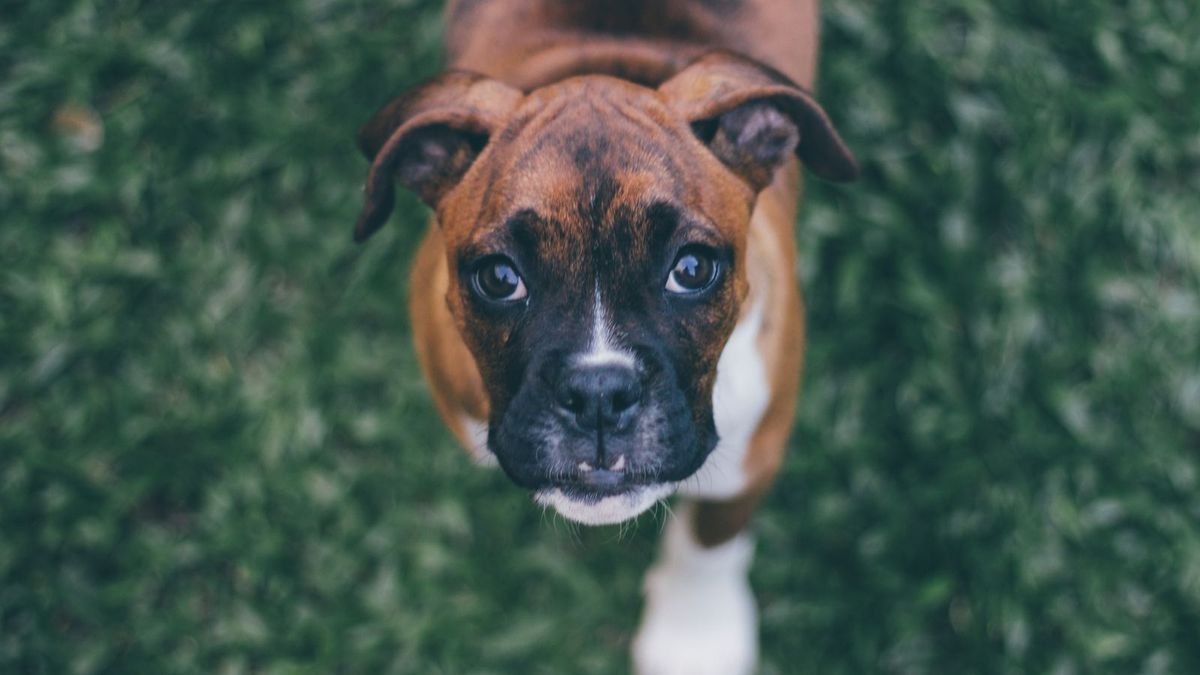
How to Potty Train a Boxer Puppy in 15 Steps
Here are the 15 steps that taught us how to potty train a Boxer puppy, one at a time. Do not try to do them all on day one. Start with the first three, add the next few over the first week, and let the rest settle in as your puppy grows. Small steps, repeated kindly, beat a perfect plan that nobody can keep up.
Step 1: Start on Day One, Not “Next Week”
The morning after our puppy came home, I told myself we would start properly on Monday. By Sunday, he had already picked his own favourite spots, and two of them were on the rug. That was my first lesson: puppies learn from day one, whether we are teaching them or not. So we started that same afternoon, with a trip outside after every meal, nap, and play session.
What worked was keeping it simple. I took him out often, said the same cue words each time, and praised him the moment he finished. Learning how to potty train a Boxer puppy starts with showing up, not with waiting for the perfect day. What to watch for is the quiet hope that he will somehow work it out alone. He will not, and the longer you wait, the more indoor habits you will need to undo later.
Step 2: Pick One Door and Stick to It
For the first few days, I took our puppy out through whichever door was closest. Front door, back door, side gate — it made no difference to me, but it made a big difference to him. He never learned where to wait, so he just went wherever he happened to be standing. The day I chose one door, the back door, and used it every single time, he started trotting toward it on his own.
What worked was hanging a small bell by that door and tapping it with his paw before we went out. Within a week, he was nudging it himself. What to watch for is changing the door when visitors come or when it rains. Puppies need one clear route, so keep the same door even when the other one is closer.
Step 3: Build a Simple Schedule You Can Actually Keep
A schedule sounds strict, but ours was written on a sticky note on the fridge: out first thing, out after meals, out after naps, out after play, and out last thing at night. That was it. I did not need a fancy chart. I needed a rhythm I could follow when I was tired, busy, or halfway through cooking dinner.
Table: A Simple Daily Potty Schedule
| Time of Day | What to Do |
|---|---|
| First thing in the morning | Straight outside to the potty spot |
| After every meal | Outside within 10 to 15 minutes |
| After naps and play | Outside as soon as your puppy wakes or calms down |
| Every two hours | A short outdoor break, even on quiet days |
| Last thing at night | One calm final trip before bed |
What worked was tying every trip to something that already happened, like a meal or a nap, instead of watching the clock all day. What to watch for is a schedule that looks perfect on paper but falls apart on a normal day. If you cannot keep it up for two weeks, simplify it until you can.
Step 4: Take Your Puppy to the Same Spot Every Time
Our garden is not big, but for the first month it might as well have been a theme park. Every blade of grass was new, and our puppy wanted to inspect all of it before even thinking about his business. So I picked one quiet corner, walked him there on the leash, and stood still. Boring, yes. Effective, very. He learned that this corner meant one thing, and he started going faster every day.
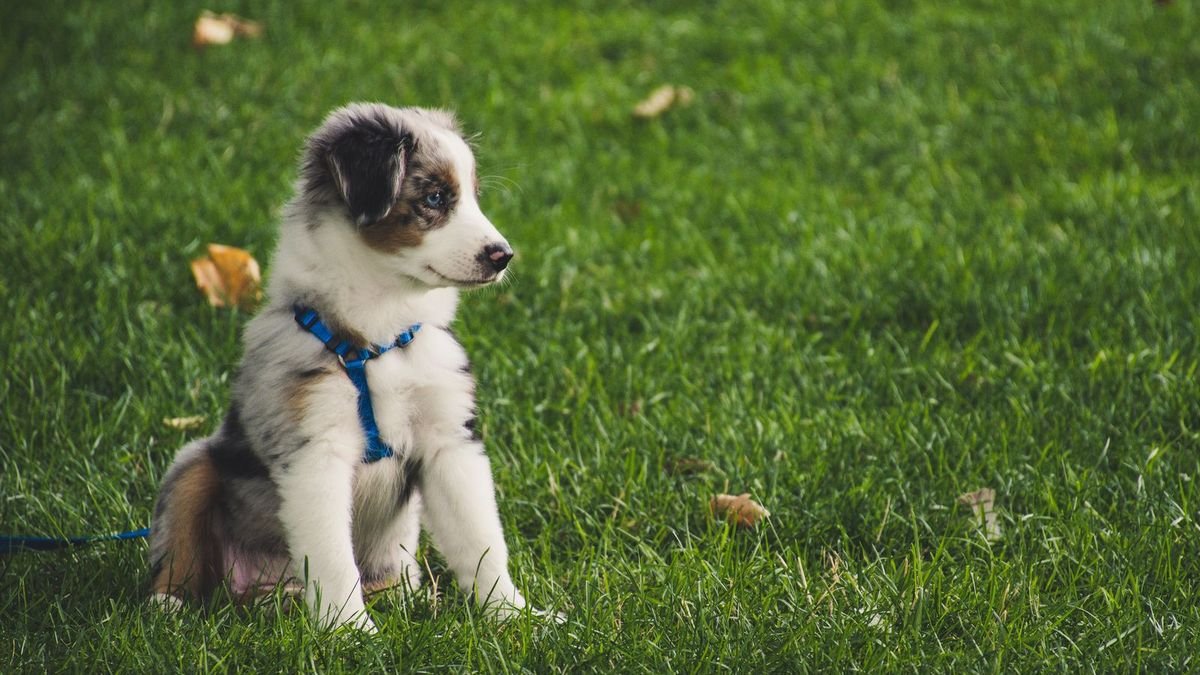
What worked was keeping him on the leash for potty trips, even in our own garden, until the habit was set. What to watch for is letting him roam free first and hoping he remembers why he is out there. A Boxer puppy with a whole garden to explore will explore first and forget the rest.
Step 5: Reward the Second It Happens
My biggest early mistake was praising our puppy after we came back inside. He had no idea what the treat was for, and I had no idea why the treats were not working. Then I started carrying treats in my pocket and rewarding him the moment he finished outside, while we were still standing on the grass. The change was almost instant. He began running to his spot with real enthusiasm.
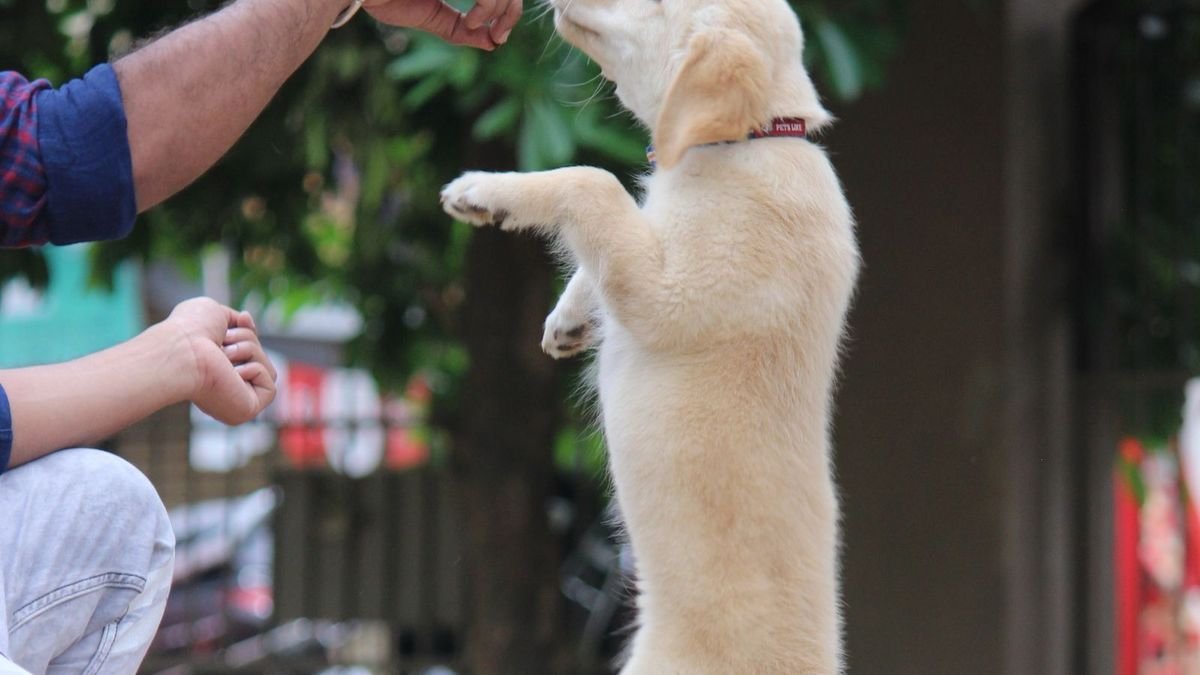
What worked was a tiny treat and a happy voice, given within seconds, every single time. What to watch for is waiting until you are indoors, or rewarding him for simply going outside. The reward has to land on the act itself, or your puppy will learn that standing in the garden earns treats, and the rest is optional.
Step 6: Use Training Pads as a Backup, Not a Crutch
We kept a training pad by the back door for the first few weeks, and on rainy nights I was glad it was there. It caught the accidents we could not prevent and saved our floor more than once. But I also noticed that when the pad was always there, our puppy started treating it as the normal toilet. So we moved it closer to the door each week, then outside the door, then away altogether.
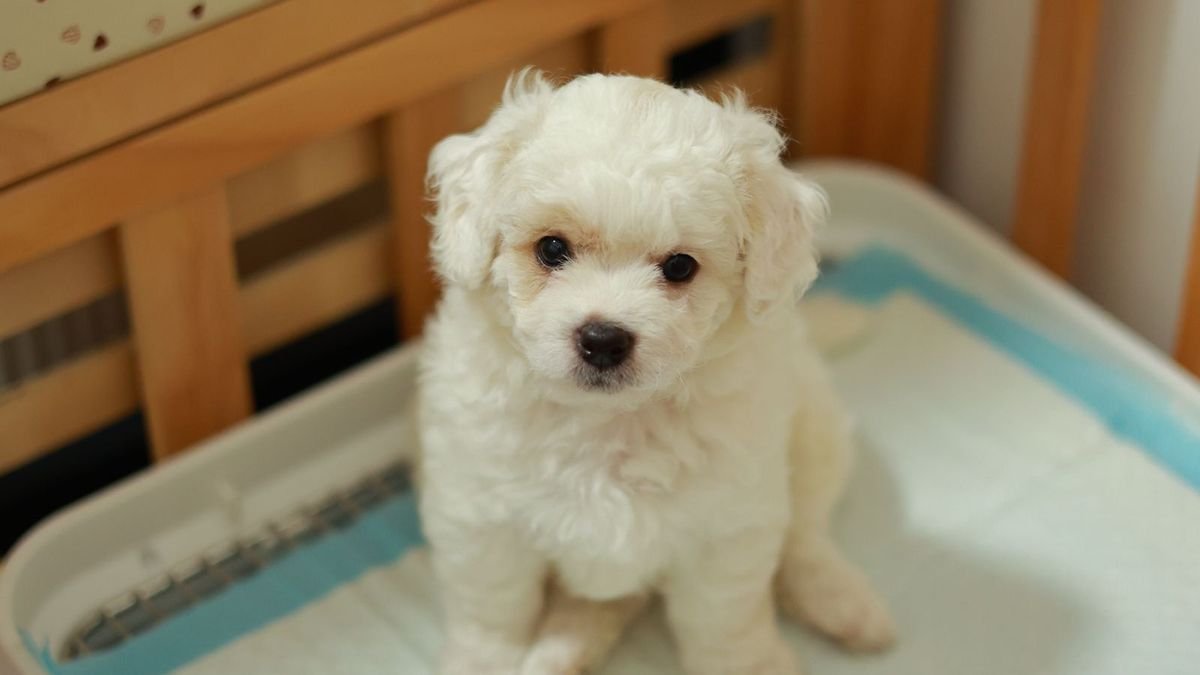
What worked was treating the pad as a short-term safety net while the outdoor habit grew stronger. What to watch for is letting pads become the plan. If your puppy can always go inside, there is no reason for him to learn to wait for the door, and the outdoor habit takes much longer to form.
Step 7: Learn Your Puppy’s “I Need to Go” Signals
Our puppy never barked to go out. Instead, he would stop playing, sniff the floor in tight little circles, and glance toward the door. I missed that look for a whole week, and every missed look became a puddle. Once I learned his signals, I could get him outside in time almost every day. Your puppy will have his own signs, and they are usually small and easy to miss.
What worked was watching him closely for one full weekend and writing down what he did right before each accident. The pattern was obvious once I looked for it. Reading those signals is a big part of learning how to potty train a Boxer puppy, and it gets easier every week.
Step 8: Watch the Clock After Meals, Play, and Naps
Puppies run on a short timer after eating, drinking, playing, and waking up. I learned this the messy way, when our puppy finished his dinner, played for five wild minutes, and then stopped mid-game with that look I had finally learned to recognise. Now I take him out after every meal, every nap, and every big play session, without waiting to see if he needs it.
What worked was treating those moments as automatic trips, not decisions. Meal done? Outside. Nap over? Outside. Play finished? Outside. What to watch for is the long, lazy afternoon when nothing much happens.
Step 9: Make the Crate a Cosy Den, Not a Jail
I was nervous about crate training at first, because it felt unkind to shut a puppy in a box. Then I watched our puppy choose to nap in his crate with the door wide open, curled up on his blanket like it was the best spot in the house. That is the whole point of a crate: a small, safe den where a puppy naturally wants to keep clean, not a punishment cell.
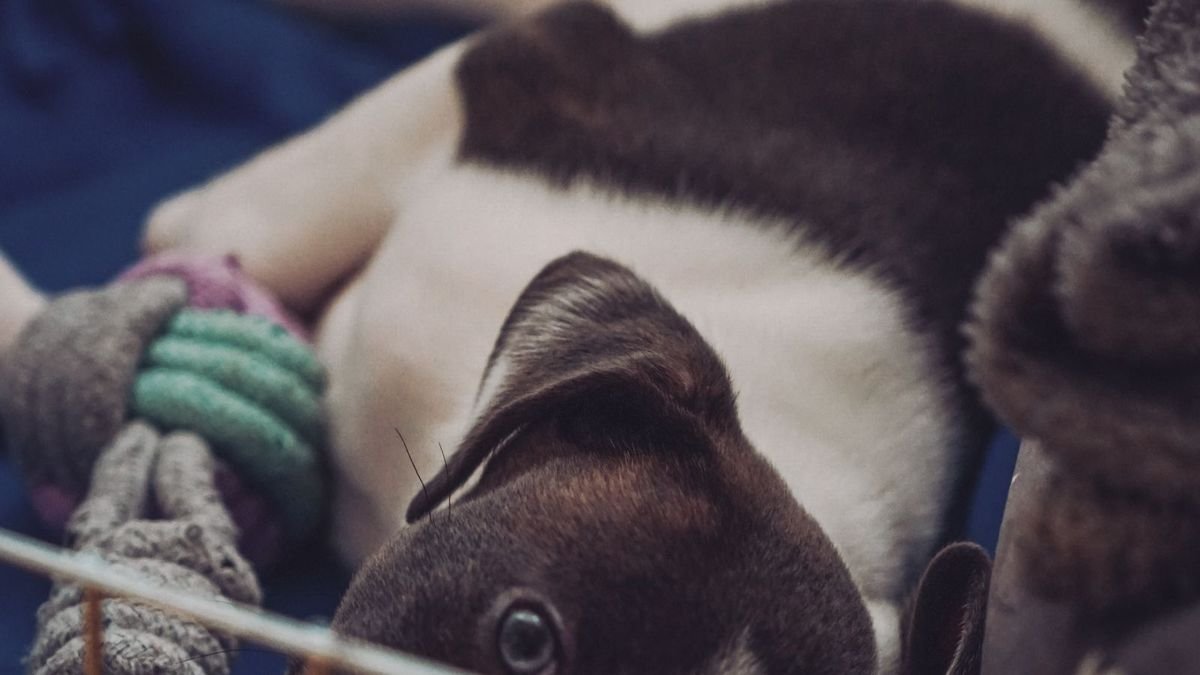
What worked was feeding him in the crate, keeping the space just big enough to stand and turn around, and never using it when I was annoyed with him. If your puppy cries in the crate at first, our guide to keeping a dog from barking in a crate has gentle ideas that helped us too. What to watch for is leaving a young puppy in the crate for hours. A crate only works when the trips outside stay frequent.
Step 10: Supervise Closely or Limit the Space
The worst accidents always happened when I was in another room. I would hear nothing, find a puddle ten minutes later, and wonder how it happened so fast. The answer was simple: I was not watching. So for the first month, our puppy was either with me, in his crate, or in a small playpen area. Freedom came later, one room at a time, once he had earned it.
What worked was a baby gate across the kitchen doorway and a leash clipped to my belt on busy days. What to watch for is giving a young puppy the run of the house too soon. A Boxer puppy with five rooms to choose from will choose the quietest one, and you will find out too late.
Step 11: Practise on Different Surfaces
Our puppy learned grass in a week, then froze completely on a gravel path at the park. He sniffed it, looked at me, and clearly had no idea that gravel counted as a toilet too. That was when I realised he had learned a place, not a skill. So we practised on grass, gravel, pavement edges, and the patch of dirt near our gate, always with a treat ready.
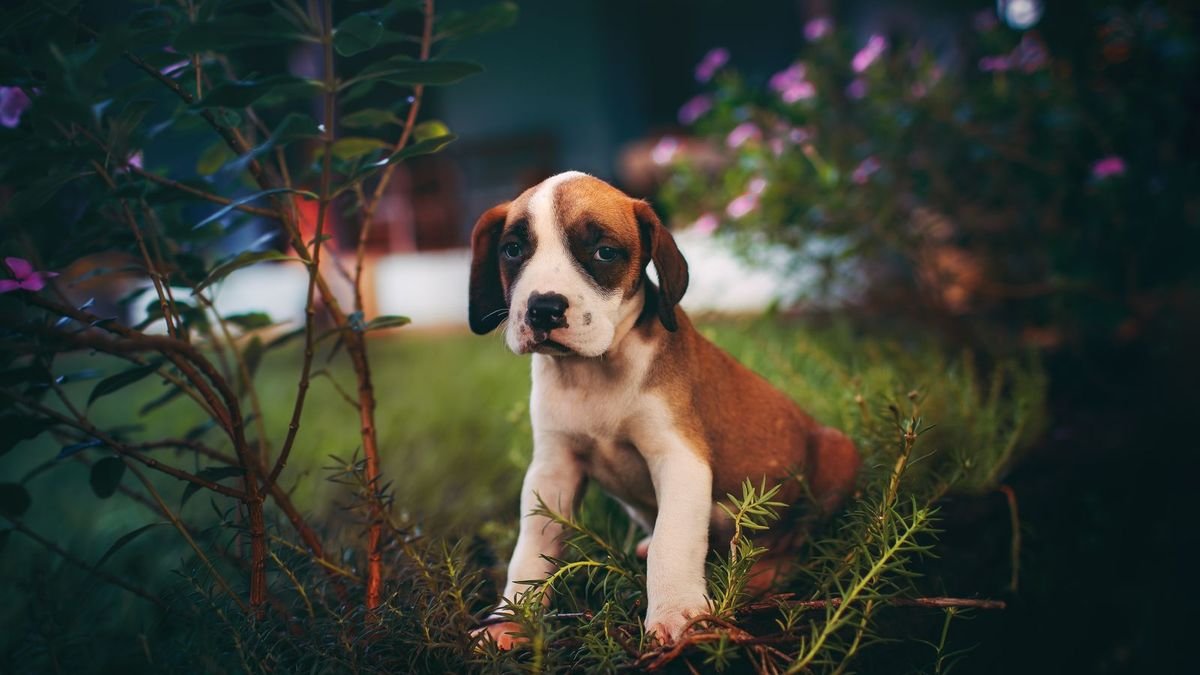
What worked was short practice trips to new surfaces, paired with the same cue words and the same reward. What to watch for is only ever using one surface at home. A puppy that will only go on grass will struggle on rainy days, on trips, and anywhere the grass is far away.
Step 12: Keep Nights Boring and Predictable
Our first nights were a mess because I treated every night-time whimper like a party. Lights on, chatting, a little play — and then our puppy was wide awake at 2 a.m., ready for the day. Once I made nights boring, everything changed. Lights low, no talking, straight outside, a quick quiet reward, and straight back to bed. He learned within days that night trips were business only.
What worked was a last trip outside just before bed and the crate close enough that I could hear him stir. Learning how to potty train a Boxer puppy at night is mostly about keeping the whole trip calm and dull, so sleep comes easily after.
Step 13: Take Training Out of the House
A puppy that only goes in his own garden is only half trained. Our first park visit proved it: our puppy needed to go, but the new smells, sounds, and other dogs were far more interesting than the grass. So we started taking short trips to quiet spots, letting him sniff for a few minutes first, and then giving him time and space to go. Patience beat pressure every time.
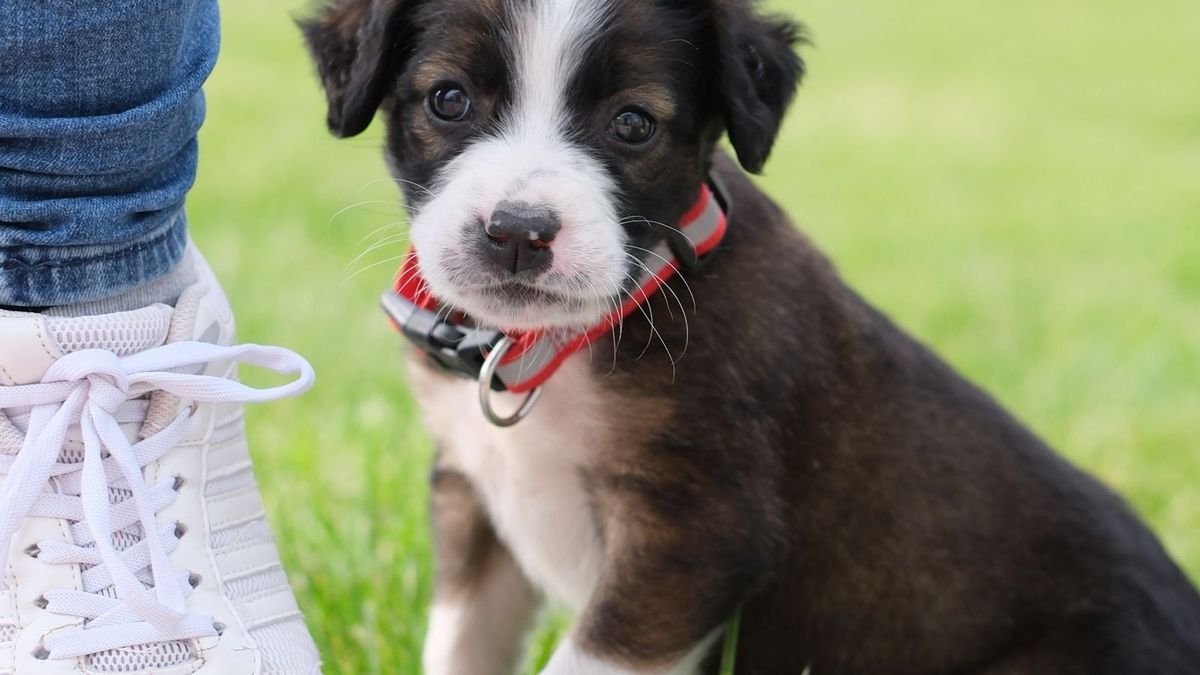
What worked was visiting the same quiet corner of the park for a few days in a row, so it became familiar. What to watch for is expecting a young puppy to perform on a busy street on the first try.
Step 14: Handle Accidents Without a Fuss
I will be honest: I raised my voice once, when I found a puddle on the rug for the third time in a day. Our puppy flattened his ears, hid behind the sofa, and went in the house again an hour later — only this time, he did it where I could not see him. That was the day I learned that scolding does not teach a puppy where to go. It only teaches him to hide it from you.
What worked was cleaning up quietly with an enzyme cleaner, then asking myself what I had missed. Was the trip late? Was he unsupervised? Was the schedule slipping? What to watch for is rubbing a puppy’s nose in a mess or scolding him after the fact.
Step 15: Track Progress and Celebrate the Small Wins
By week three, I was sure nothing was working, until I looked at the little notebook on the fridge. Week one had nine accidents. Week two had five. Week three had two, and one of them was my fault for taking a long phone call. Writing it down turned a bad day into proof that we were getting somewhere, and that proof kept me going on the hard days.
What worked was a simple tally on the fridge: a tick for every outdoor success and a note for every accident. What to watch for is judging the whole journey by one bad day. Progress with a Boxer puppy is rarely a straight line.
How to Potty Train a Boxer Puppy at Night
Nights deserve their own plan, because a sleeping puppy and a sleeping owner are not a great team. It took us a few nights to learn how to potty train a Boxer puppy after dark. We kept the crate beside our bed for the first few weeks, so I could hear the small stirrings that came before a whimper. Most nights, our puppy needed one trip out in the early hours, and that trip got later and later as the weeks passed.
Common Potty Training Problems (and What Worked for Us)
Learning how to potty train a Boxer puppy means accepting that setbacks are part of the process. The second problem was a sudden step backwards after a good week. He had gone five clean days, then had three accidents in one afternoon. I was gutted, but nothing had gone wrong. He was just tired after a busy weekend, and I had stretched the gaps between trips too far. We went back to the simple schedule for a few days, and the clean days returned.
How Long Does It Really Take?
When people ask me how long it takes to learn how to potty train a Boxer puppy, I say around three to six months for most puppies to become reliably clean. Our puppy was mostly reliable by four months, with the odd accident when he was excited or when our routine slipped. The first two weeks are the hardest, the next month is steady progress, and after that you will notice long clean stretches that keep getting longer.
Final Thoughts
Potty training a Boxer puppy is messy, funny, and far more rewarding than it looks on day one. There will be puddles, there will be days when you wonder if it is working, and then one morning you will open the back door and your puppy will trot straight to his spot without being asked. That morning is worth every mop.
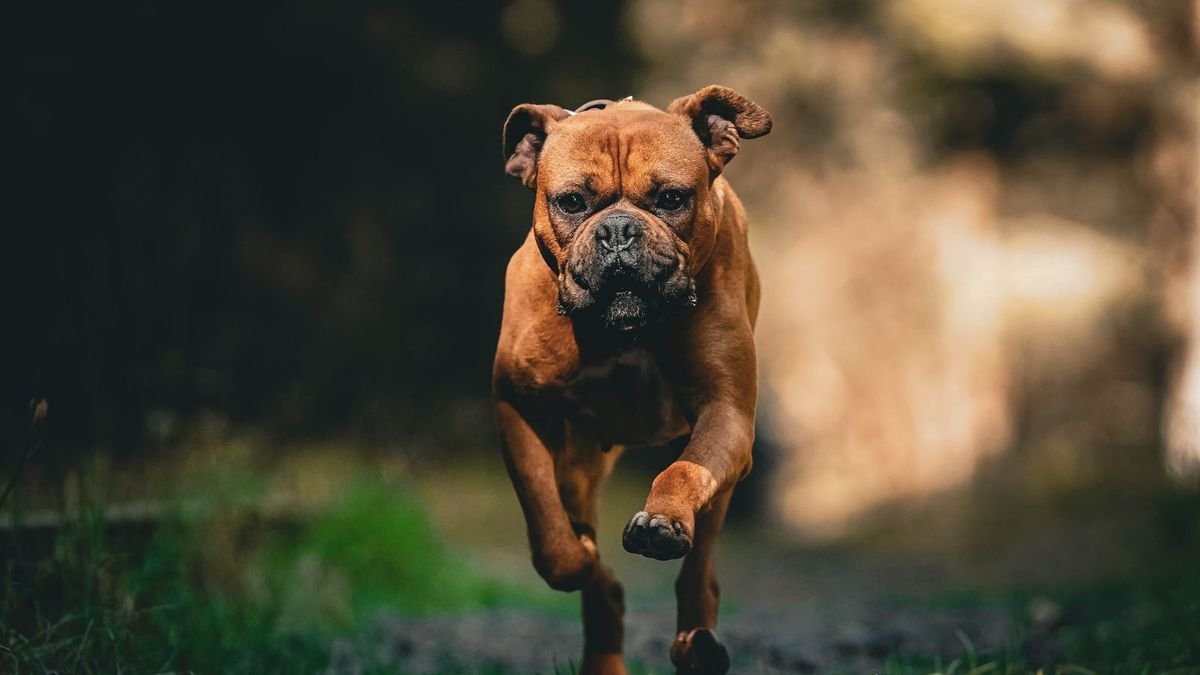
If you follow these steps, learning how to potty train a Boxer puppy becomes a steady daily habit rather than a daily battle. Start today, keep it simple, and be kind to yourself as well as your puppy. The routine you build now becomes the habit your adult Boxer keeps for life, and the patience you practise now builds a bond that lasts. You have got this — one trip outside at a time.
FAQs
How long does it take to toilet train a Boxer puppy?
It usually takes 3 to 6 months to fully toilet train a Boxer puppy, depending on age, consistency, and routine. Learning how to potty train a Boxer puppy is a gradual process, and most owners see steady progress in the first few weeks. Keep the schedule simple, reward every outdoor success, and expect the odd setback along the way.
How to stop a Boxer from peeing in the house?
Set a strict routine, supervise closely, and take your Boxer out often to prevent indoor accidents. The fastest way to learn how to potty train a Boxer puppy is to catch the signals early and guide your puppy to the same spot every time. Clean accidents quietly, keep the schedule steady, and the indoor peeing fades as the habit grows.
What is the fastest way to potty train a puppy?
Use frequent outdoor trips, reward immediately, and keep a predictable routine. When you are learning how to potty train a Boxer puppy, short and regular trips work better than long gaps between outings. Take your puppy out after meals, naps, and play, and praise the moment they finish outside.
What is the fastest way to potty train a Boxer puppy at night?
Keep nights calm and boring, take your puppy out last thing before bed, and answer night whimpers quietly and quickly. Learning how to potty train a Boxer puppy at night takes patience, and most puppies need one night trip for the first few weeks. As your puppy grows, the night trips get later and then stop altogether.
If you take one thing from this guide, let it be this: learning how to potty train a Boxer puppy is a team effort between you and your puppy, and every calm, consistent day moves you closer to a clean house.