
I still remember the first time a Black Great Dane walked into my life. One minute I was looking at photos of a gentle giant with a striking black coat, and the next I was standing next to a dog taller than my kitchen counter, wondering where on earth he would sleep. That moment taught me the real question is not how beautiful this large breed looks, but whether a dog this big fits your home, your routine and your budget. In this guide I share what I learned the honest way, from size and temperament to training, feeding, health and puppy costs, so you can decide with confidence.
Key Takeaways
- A Black Great Dane is a giant, gentle and loyal family dog with a solid black coat.
- Expect a dog about 28 to 32 inches tall and 110 to 175 pounds, with a short coat that needs only weekly brushing.
- Plan on 60 to 90 minutes of daily activity, early training and enough floor space for a very large dog.
- The average lifespan is 7 to 10 years, and the biggest health worry is bloat.
- Budget for a large dog: higher food, equipment and vet costs, and choose a breeder who screens for hip, heart, eye and thyroid problems.
What Is a Black Great Dane?
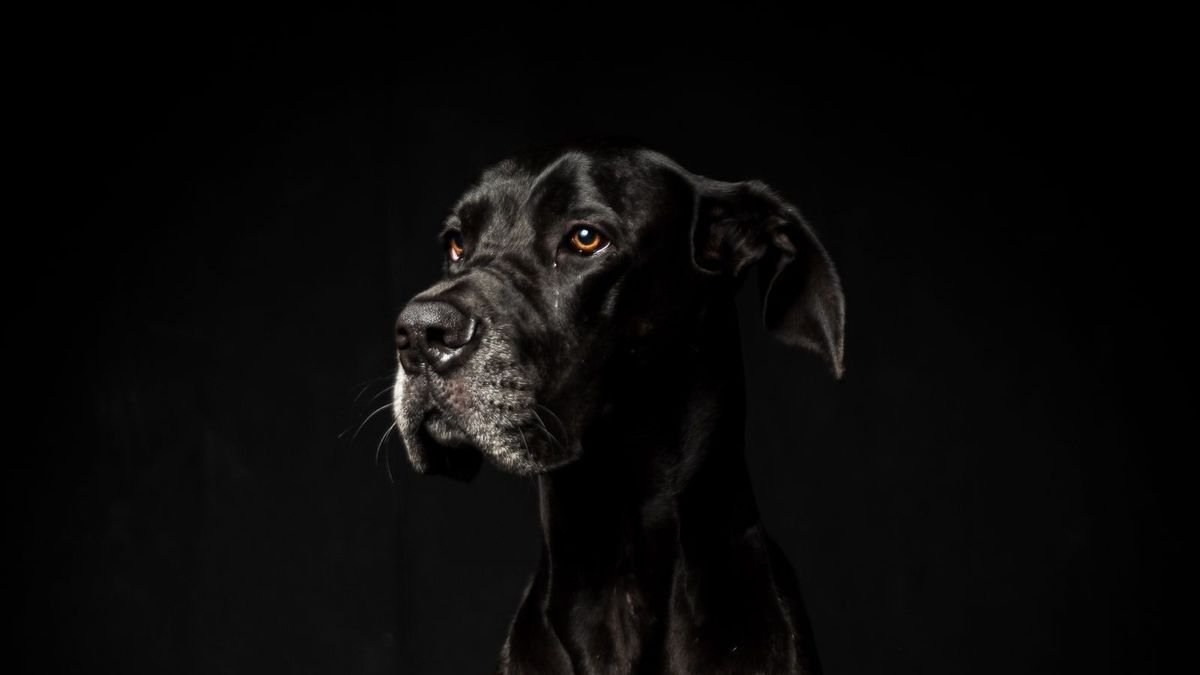
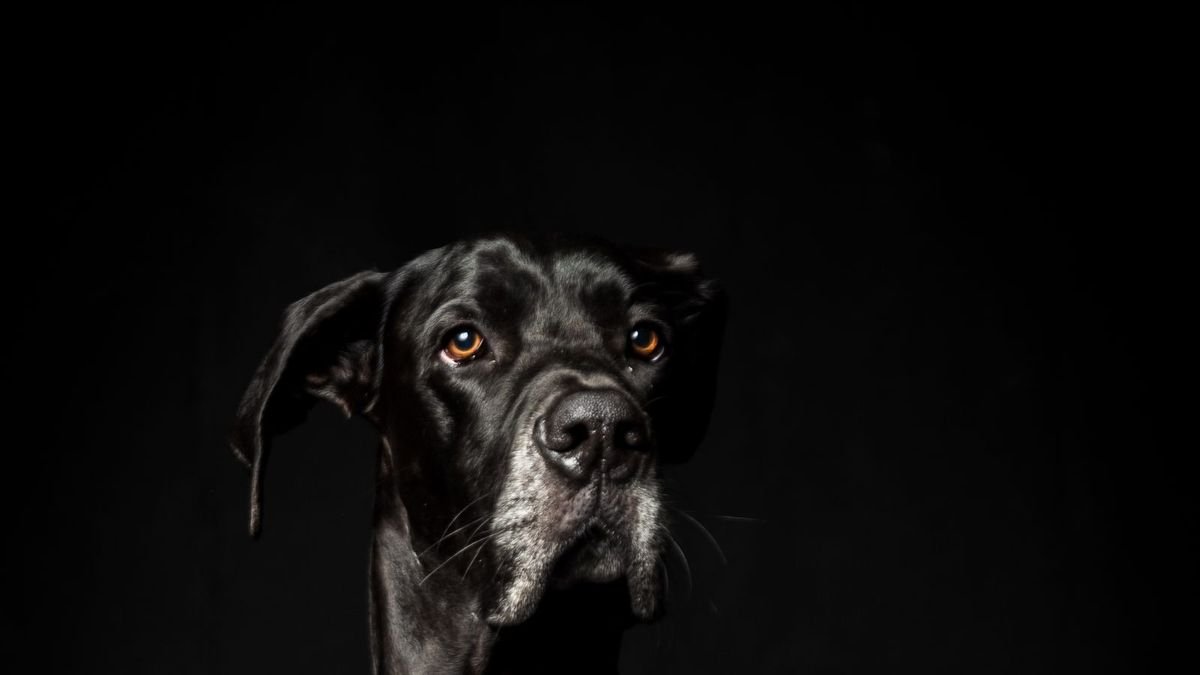
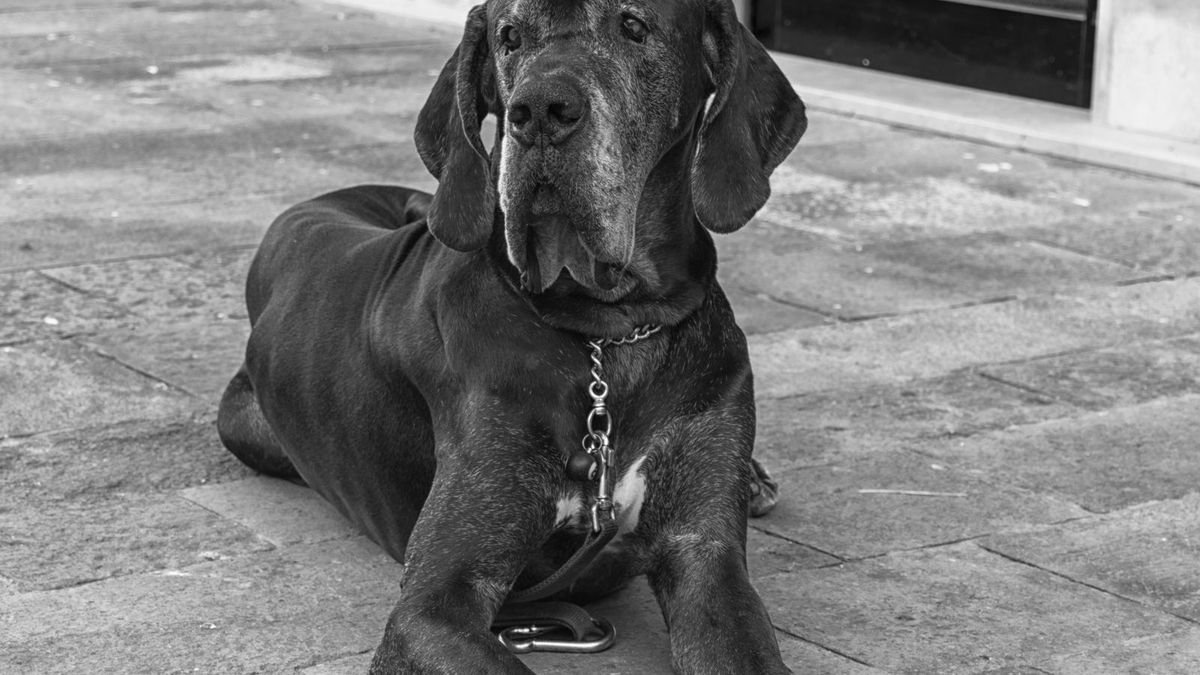
The first thing I had to learn was that a black Great Dane is not a separate breed. It is a Great Dane with a solid black coat, one of the colours the American Kennel Club lists in the breed standard. The dog under that coat is the same tall, kind and people-loving giant as a fawn or harlequin Dane. When I met my first one, a senior with a grey muzzle, I was struck by how calm he seemed.
That calm look is the breed in a nutshell. Danes were bred in Germany as estate and hunting dogs, and the modern breed keeps the size but not the aggression. A black Dane is usually gentle, patient and happiest close to its people, which is why so many owners call it a lap dog that never learned its own size. If you want a calm giant that guards by presence, this breed fits well.
Where Does the Black Great Dane Come From?
The Great Dane’s story starts in Germany, where large boar-hunting dogs were crossed with mastiff-type dogs to create a fast, powerful and steady animal. By the 1800s the breed had settled into the tall dog we know today, and in 1887 the American Kennel Club recognised it as a breed. Black was there from the start as one of the accepted colours, alongside fawn, brindle, blue, harlequin and mantle.
I like knowing that history because it explains the dog in my living room. The hunting past left the Dane with a strong body and a calm nerve, while life as a companion and estate dog shaped a gentle, watchful friend. A black Dane still carries that mix: big enough to impress, steady enough to live with children and guests, and loyal enough to follow its family from room to room. The colour is a matter of taste; the character comes from the breed’s history.
How Big Does a Black Great Dane Get?
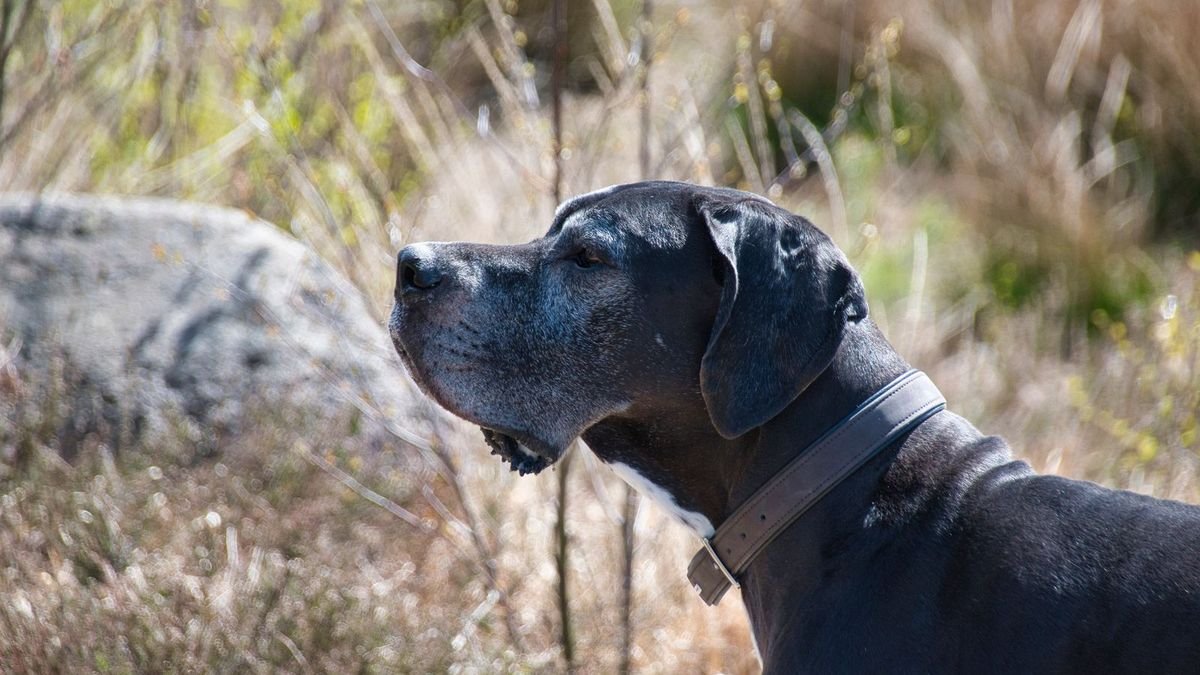
Size is the first problem to solve, and I learned to measure my home before I measured the dog. Adult males usually stand 30 to 32 inches at the shoulder and weigh 140 to 175 pounds, while females stand 28 to 30 inches and weigh 110 to 140 pounds, according to the American Kennel Club. That makes a Dane taller than most kitchen counters and heavier than many adults. Puppies grow fast, and a young Dane can reach most of its height in the first year, then fill out slowly.
The growth table below is the one I wish I had seen first, because it turns a vague idea of ‘big’ into numbers you can plan around. A crate, a car, a bed and a food budget all change when the dog reaches 100 pounds and keeps growing. Measure your doorways and the space beside your sofa now. The ranges are typical, not promises.
| Age | Height | Weight |
|---|---|---|
| 3 months | 16–18 inches | 30–40 pounds |
| 6 months | 24–26 inches | 60–75 pounds |
| 9 months | 27–29 inches | 85–100 pounds |
| 12 months | 28–31 inches | 100–130 pounds |
| 18 months | 28–32 inches | 110–160 pounds |
| Adult | 28–32 inches | 110–175 pounds |
What Makes the Black Coat So Special?
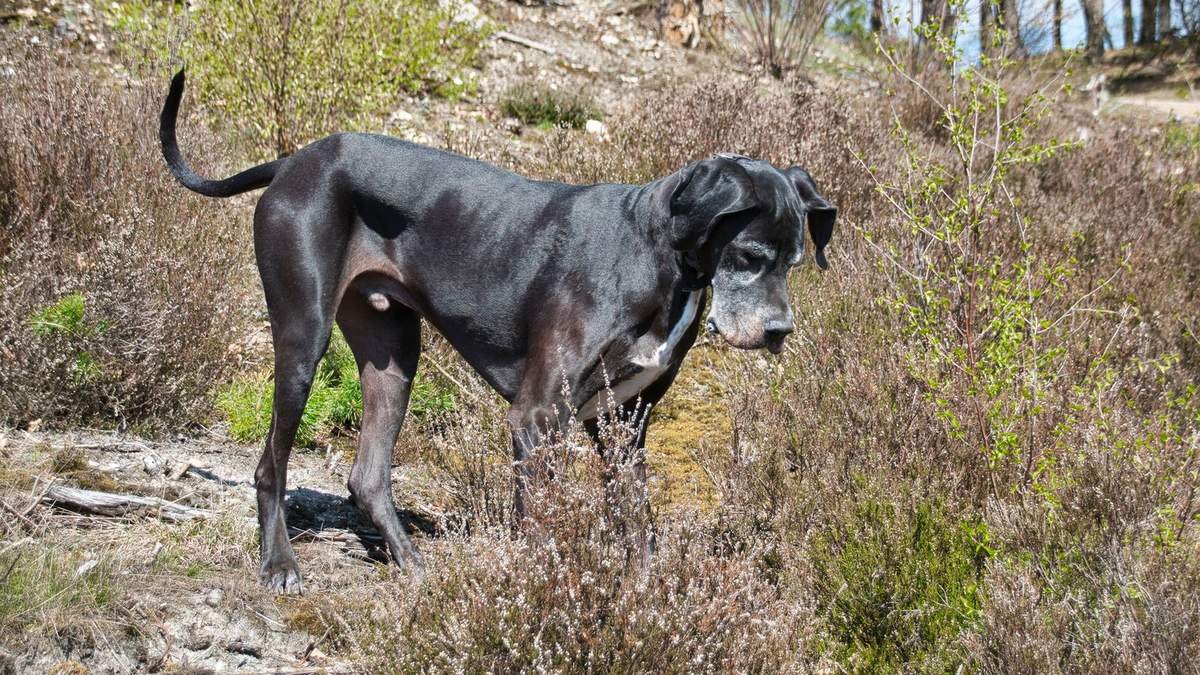
A solid black coat looks simple, but it is one of the most striking things about this dog. The short, smooth hair lies close to the body, so a black Dane looks almost polished in good light, with a deep shine that shows off the long neck and the square head. A small white chest patch is common. The coat does not change the dog’s nature, but a black Dane turns heads on every walk.
Caring for that coat is easier than most people expect, which was a relief to me. A weekly brush with a soft bristle brush or a grooming mitt removes loose hair, and a bath every few weeks keeps the coat shiny. Black hair shows dust easily, so I keep a damp cloth handy. The coat sheds moderately all year, with a heavier shed in spring and autumn, so a washable sofa cover helps.
How Does a Black Great Dane Compare With Other Giant Breeds?
Before I committed, I compared the Dane with the other giants I kept seeing at the park, because a black coat is only one part of the decision. The table below puts the Dane next to the Newfoundland, the Irish Wolfhound and the English Mastiff, the three breeds people most often weigh it against. What stood out was the Dane’s balance: taller than the others, calmer than a young Mastiff, easier to groom than a Newfoundland, and more at home indoors than a Wolfhound. Read the table as a guide, not a promise: every dog is an individual.
The comparison also shows the trade-off that matters most. Every giant breed lives a shorter life than a small dog, and the Dane’s 7 to 10 years is typical of the group. The Newfoundland lives a little longer on average, and the Wolfhound a little less. So the real question is not which giant lives longest, but which temperament and coat fit your home.
| Breed | Height | Weight | Temperament | Exercise | Grooming | Lifespan | Best home |
|---|---|---|---|---|---|---|---|
| Great Dane (black) | 28–32 inches | 110–175 pounds | Gentle, loyal, calm | 60–90 minutes daily | Weekly brushing | 7–10 years | Spacious homes |
| Newfoundland | 26–28 inches | 100–150 pounds | Sweet, patient | 60 minutes daily | Twice a week | 9–10 years | Family homes |
| Irish Wolfhound | 30–35 inches | 105–180 pounds | Quiet, gentle | 60–90 minutes daily | Weekly brushing | 6–8 years | Large homes |
| English Mastiff | 27.5–30 inches | 120–230 pounds | Calm, devoted | 45–60 minutes daily | Weekly brushing | 6–10 years | Large homes |
What Is a Black Great Dane’s Temperament Like?
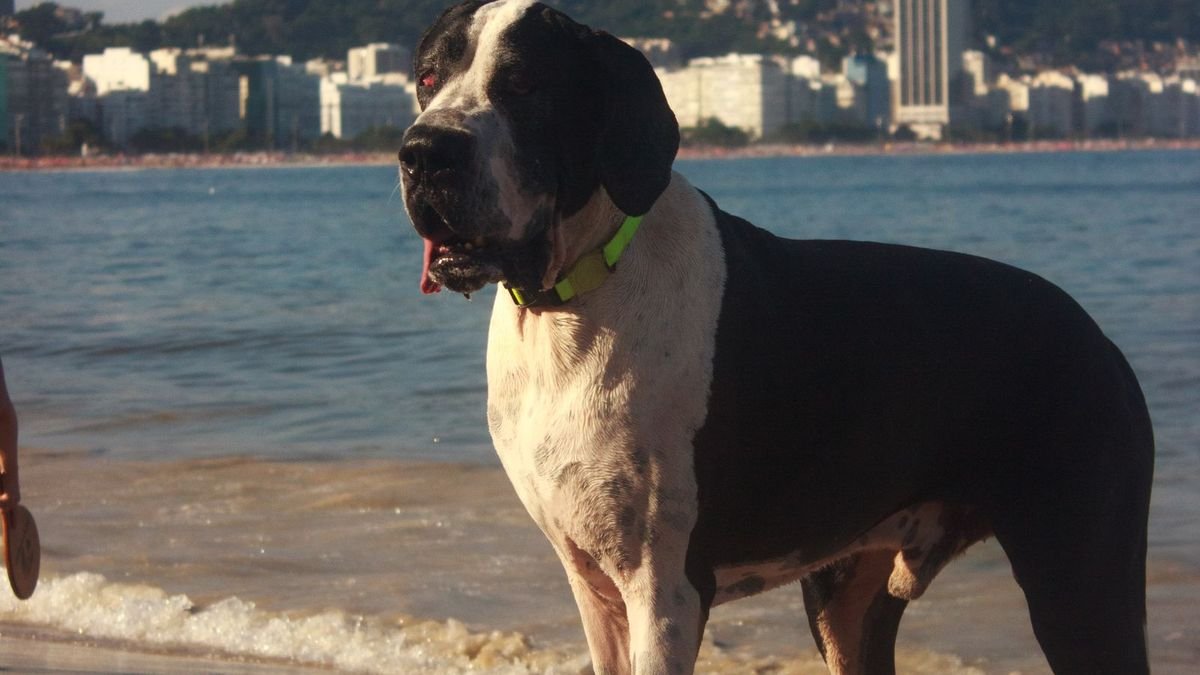
If I had to describe my black Dane in one word, it would be gentle. Danes are known as gentle giants for a reason: they are patient, affectionate and deeply attached to their people, and they often behave like oversized lap dogs. My dog leans against my leg while I work and greets visitors with a wagging tail rather than suspicion. That warmth is why so many families choose a Dane.
The same size that makes the breed impressive also makes early training essential. A Dane that jumps up or pulls on the lead is a problem at 150 pounds, even when it means well, so I started with calm greetings and loose-lead walking from the first week. The breed is sensitive and responds best to kind, consistent training with rewards, not to harsh corrections. With that approach, a black Dane grows into a calm, polite companion.
How Do I Train a Black Great Dane?
Training a giant breed is less about tricks and more about manners, and I learned that the earlier you start, the easier everything becomes. Short, cheerful sessions of five to ten minutes work better than long drills, because a young Dane’s attention span is short and its joints are still growing. I taught the basics first — sit, stay, come, leave it and a calm settle on a mat — and I practised them in the garden, then on quiet streets, then in busier places.
Socialisation matters as much as obedience, so I introduced my dog to different people, sounds and places while he was young, always at his own pace. A Dane that has met children, bicycles, other dogs and busy streets grows into a confident adult instead of a nervous one. Expert Tip: keep training positive and consistent, and teach a reliable recall and a ‘settle’ before your Dane reaches full size.
How Much Exercise Does a Black Great Dane Need?
A common myth is that a Dane needs hours of running, and I believed it until I watched my own dog. Most adult Danes do well with 60 to 90 minutes of activity a day, split into a couple of walks and some gentle play, and they are happy to rest for the rest of the day. They are not built for long runs or jumping, especially while they are growing, so I keep exercise steady and low-impact.
Puppies need less, and that surprised me most. A young Dane’s joints are still forming, so short walks and free play in the garden are better than long hikes or stairs. I followed the simple rule of a few minutes of walking per month of age, twice a day, and saved the longer walks for adulthood. After exercise, my dog usually flops down for a long nap.
What Should I Feed a Black Great Dane?
Feeding a giant breed is a budget item, not an afterthought, and I learned to plan for it before the dog arrived. An adult Dane eats far more than a medium dog, and food made for large or giant breeds suits the breed’s slower growth and joint health. I feed measured meals twice a day rather than leaving food down all day, which keeps weight steady. Fresh water should always be available.
Puppies need special care, because a giant puppy that grows too fast can develop joint problems. I chose a large-breed puppy food and followed the feeding guide on the pack, adjusting only after talking with my vet about my dog’s weight and growth. Treats count toward the daily total, so I keep them small and use part of the daily food as training rewards. The goal is a lean, steady dog.
How Much Grooming Does a Black Great Dane Need?
Grooming a black Dane is one of the easiest parts of owning one, and that was a pleasant surprise after the brushing needs of longer-coated breeds. The short, smooth coat needs a quick brush once a week and a bath every month or two. The black coat shows dust easily, so a weekly brush keeps it looking polished. Nails need trimming every few weeks, because long nails click loudly on hard floors.
The smaller jobs matter just as much, and I built them into a weekly routine. I check and clean the ears, brush the teeth a few times a week with a dog toothbrush, and look over the paws after walks. A Dane that is handled calmly from puppyhood accepts all of this without fuss, which makes the routine quick. If you want a big dog with a low-maintenance coat, this is one of the breed’s real advantages.
What Health Problems Should I Watch For?
Every breed has health worries, and with a Dane the honest answer is that the lifespan is shorter than most owners wish. The American Kennel Club gives a lifespan of 7 to 10 years, and PetMD lists bloat, hip dysplasia, heart disease and Wobbler syndrome among the conditions owners should know about. Bloat is the most urgent: it is a twisting of the stomach that needs emergency care, and it is the leading cause of death in the breed according to the AKC. I learned the warning signs — a swollen belly, restlessness and retching without bringing anything up — and I keep my vet’s number saved.
The best protection is not a treatment but a habit: choose a breeder who screens breeding dogs for hip, heart, eye and thyroid problems, keep your dog lean and feed smaller meals. Expert Tip: ask a breeder for the health screening results of both parents before you pay a deposit — a good breeder will be glad you asked. Regular check-ups help your vet spot problems early. This guide gives general information only; it is not medical advice, and any health worry should go straight to your vet.
How Do I Choose a Black Great Dane Puppy?
Choosing a puppy is where patience pays, and I wish someone had told me to slow down. A good breeder will ask you as many questions as you ask them, show you the puppy’s parents, and share health screening results for hips, heart, eyes and thyroid. The puppies should be clean, bright-eyed and confident, with their mother nearby. If a seller will not let you meet the parents or show screening results, walk away — a healthy puppy is worth waiting for.
Once you bring a puppy home, the first weeks are about gentle routine, not rules. I set up a large crate, a comfortable bed, food and water bowls, and a quiet corner where the puppy could rest, then kept days calm and predictable: regular meals, short play, toilet breaks and lots of sleep. A puppy class run by a kind trainer is worth every penny, because it teaches both of you at the same time.
Is a Black Great Dane Good With Children and Other Pets?
This is the question every family asks me, and the honest answer is yes, with supervision and training. Danes are famously patient and gentle with children, and they often bond closely with the whole family, but a dog this size can knock a small child over by accident. I teach children to be calm around the dog and never to climb on it. With those rules, a Dane becomes a loyal playmate and a calm presence in a busy family home.
With other pets, a well-socialised Dane is usually friendly, especially if it grows up with them. My dog shares the house calmly with smaller animals, but I introduced them slowly and kept early meetings short and supervised. If you already have a family dog and want to compare, my guide to the best family dog breeds explains how the Dane’s gentle nature fits alongside other family-friendly breeds. The key is early, positive introductions and a home with enough space for every animal to have its own resting place.
How Much Does a Black Great Dane Cost?
The price of a giant dog surprises most first-time owners, and I always suggest doing the maths before falling in love with a puppy. A black Great Dane puppy from a health-screened breeder usually costs more than a puppy from an untested litter. On top of the purchase price, you need a large crate, a strong lead, a big bed, bowls and food, and the monthly food bill for a 150-pound dog is several times the cost of feeding a small breed.
The ongoing costs are the ones that matter most, because they last for the dog’s whole life. Large-breed food, bigger doses of routine parasite prevention, larger equipment and higher vet bills all add up, and a giant breed can need more space in the car and at home. If a giant dog’s budget feels like too much, my guide to medium dog breeds shows a middle ground between size and energy. For me, the costs are worth it, but they should never come as a surprise.
Is a Black Great Dane Right for My Home?
After everything I have learned, the decision comes down to three honest questions: do you have the space, the time and the budget for a very large dog? A Dane needs room to stretch out, a garden or nearby walks, and an owner who can give it an hour or more of attention every day. It does not need a mansion, and it can live in a large flat if the owner is committed, but a small flat with no lift and narrow stairs is a poor fit for a 150-pound dog. If you want a calmer, smaller option for flat life, my guide to the best dog breeds for apartments lists breeds that cope better with apartment living.
If you can answer yes to space, time and budget, a black Dane will repay you many times over. Mine greets me at the door, leans on me while I read, and turns every walk into a small parade. The black coat is beautiful, but the real reward is the temperament: gentle, loyal and quietly funny. Choose a good breeder, train early and feed sensibly, and you will have a companion that fills your home in the best possible way.
Frequently Asked Questions About the Black Great Dane
Are black Great Danes rare?
No. Black is one of the standard colours listed in the Great Dane breed standard, so black Danes are not rare. A black coat does not make a Dane more valuable, and it does not change the breed’s temperament.
How long do black Great Danes live?
Most Great Danes live 7 to 10 years, according to the American Kennel Club. Choosing a breeder who screens for hip, heart, eye and thyroid problems gives a puppy the best start.
Are black Great Danes good with children?
Yes, with supervision and training. Danes are patient and gentle with children, but their size means they can knock a small child over by accident. Never leave a young child alone with any dog.
How much exercise does a black Great Dane need?
Most adult Danes need 60 to 90 minutes of activity a day, split into walks and gentle play. Puppies need less, with short walks and free play, and adults should avoid hard exercise right after meals.
Do black Great Danes shed a lot?
They shed moderately all year, with heavier shedding in spring and autumn. A weekly brush keeps the short black coat tidy, and a bath every month or two keeps it shiny.
Sources and Further Reading
I checked breed size, temperament, exercise and health guidance with the American Kennel Club and PetMD. The links below go to the pages I used.