
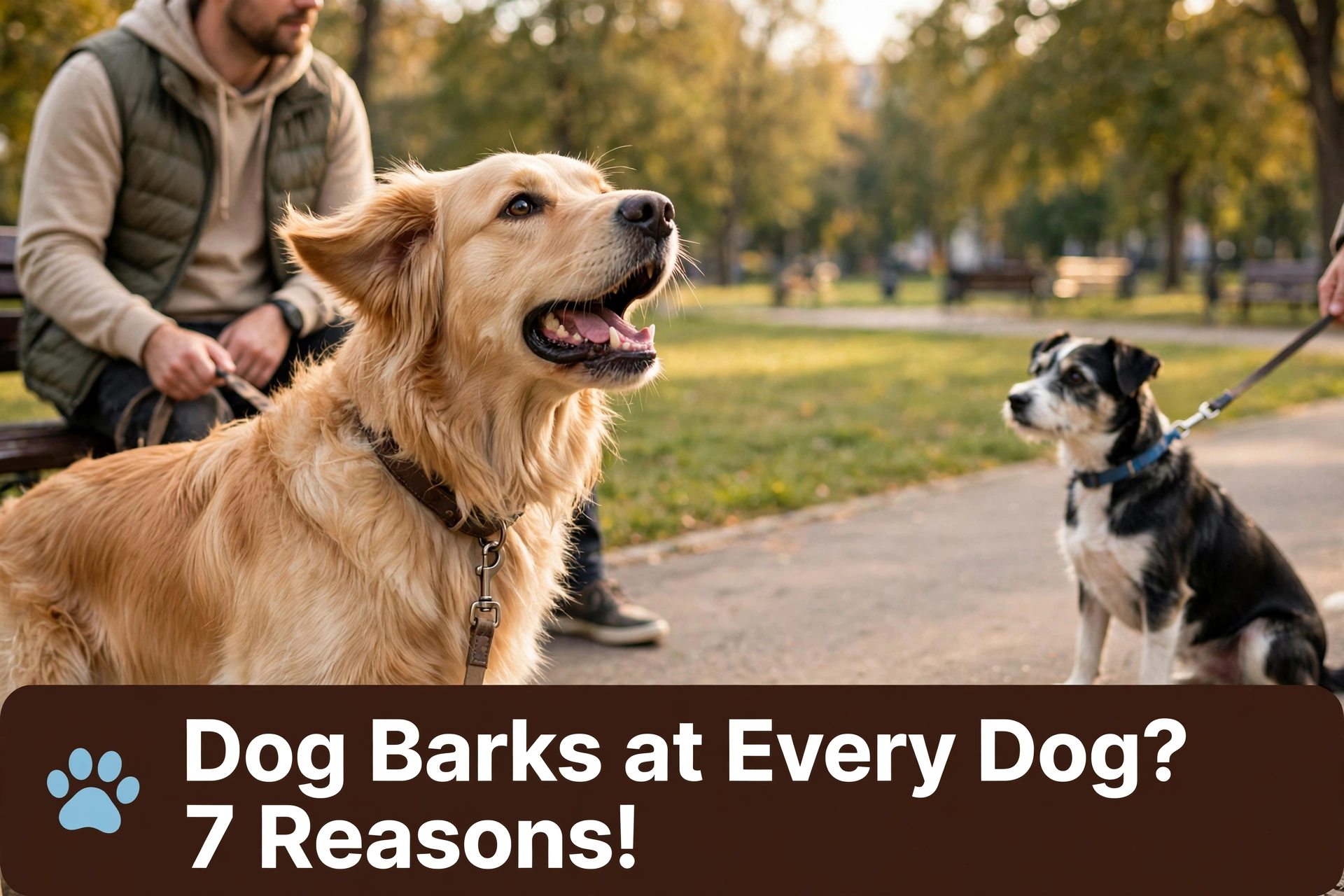
The first time my dog lost his cool at another dog on a walk, I froze. One minute we were strolling along our usual route, the next he was barking his head off at a spaniel across the road, and I was standing there holding the lead, wondering why is my dog barking at other dogs. It felt like everyone was watching, and I had no idea what to do. That was the start of a long learning curve for both of us.
What I found out, slowly and by trial and error, is that barking is my dog’s way of talking. It is communication, not bad behaviour, and once I learned to read what he was saying in the moment, I could start to change the pattern. In this guide I will walk you through exactly seven reasons dogs bark at other dogs, how I learned to spot the trigger before the barking starts, and the calm, practical things that worked for us on walks.
Before I get to the seven reasons, here is the one idea that changed everything for me. Barking at other dogs does not mean your dog is aggressive, stubborn or badly trained. I have seen it happen on my own street more times than I can count, and it is never about a bad dog. Many friendly dogs bark. Many nervous dogs bark. Even well trained dogs bark when something in the moment feels too big for them. My job was not to punish the bark, but to understand the feeling behind it and to give my dog a better way to cope.
When I did that, the barking started to fade on its own, because the need behind it had gone. That question — why is my dog barking at other dogs — was the first thing I typed into a search box on the day it all started.
Table of Contents
How I Learned to Read the Trigger in the Moment
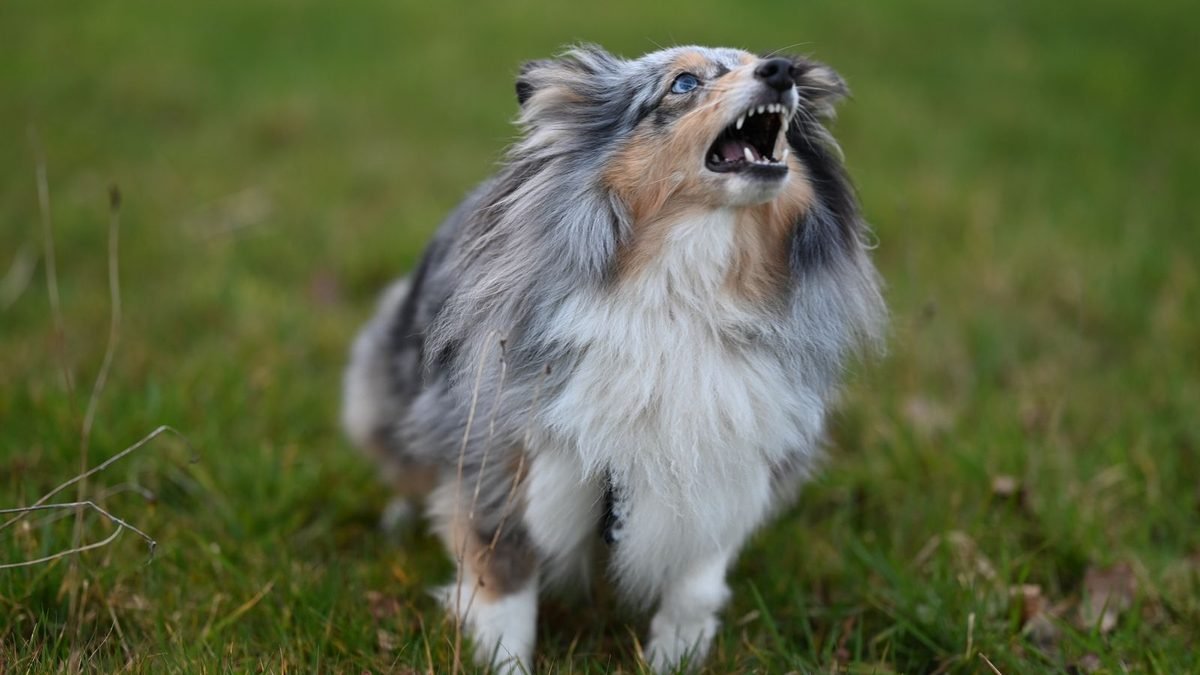
Barking rarely comes out of nowhere. I learned that my dog gives a string of small signals before the first bark, and if I catch them, I can act a few seconds earlier, when he can still think and listen. Those few seconds are the whole game.
Once a dog is over threshold, which is trainer language for too upset or too excited to cope, learning stops and the barking takes over. This is the point where I first asked myself why is my dog barking at other dogs, and the honest answer was that he had been telling me for a while. My goal on every walk now is to notice the build-up and to create distance before my dog tips over that line.
These are the early signs I watch for when another dog appears:
- A stiff body and a high, still tail
- Hard staring, with the ears pricked forward
- A closed mouth and a fixed, forward lean
- Hackles rising along the shoulders or back
- A sudden stop, a low crouch, or hard pulling toward the other dog
- Whining, yawning or lip licking as the other dog gets closer
None of these signs means a dog is being naughty. They are information. A stiff body and a hard stare usually mean a dog feels worried or challenged. Whining and lip licking usually mean a dog is torn between wanting to say hello and wanting the other dog to go away.
When I see the early signs, I have a choice. I can cross the road, turn around, step behind a parked car, or ask my dog for a simple behaviour he knows well, such as a sit or a look at me. The earlier I act, the calmer the walk stays, and the more my dog learns that other dogs are nothing to shout about.
Tip: The first few seconds are the whole game. If I act while my dog is still under threshold, one calm turn can prevent a whole barking episode.

Why Is My Dog Barking at Other Dogs? 7 Reasons
Every dog is different, but almost all barking at other dogs comes down to one of seven reasons. I worked through them one by one with my own dog, and I recognised two straight away. That is your starting point too. The reasons often overlap, so do not worry about finding a single perfect label.
What matters is matching the reason to the right response. If you want the full deep dive after this, read our guide Why Does My Dog Always Bark at Other Dogs — 10 Hidden Reasons You Never Expected. If you are reading this because you keep asking why is my dog barking at other dogs, start with the reason that sounds most like your dog, and work from there.
1. Fear and Worry
Fear is the most common reason dogs bark at other dogs, and it is also the most misunderstood. I used to think my dog was being stubborn. He was not. A frightened dog is not trying to be difficult. Barking is the dog’s way of saying, “Stay away from me.” The dog hopes the noise will make the other dog keep its distance, and very often it works, which is why the behaviour sticks.
Fear barking is common in rescue dogs, in dogs that had a bad experience with another dog, and in dogs that simply did not meet many other dogs when they were young. I can spot it in my dog’s body language now.
A fearful dog barks while leaning away, with the tail tucked low, the ears pinned back, and the weight on the back feet. The bark is usually sharp and repeated, and the dog may bark hardest when the other dog is close but not yet near enough to touch.
If you are wondering why is my dog barking at other dogs when he is frightened, you are not alone — fear was the first reason I found, and the easiest to miss.
The worst thing I did in the early days was to force a greeting. Dragging my dog closer to the thing he feared only confirmed that other dogs are a threat. What helped instead was distance and choice. I let my dog watch other dogs from far away, where he felt safe, and I rewarded calm looking. I kept meetings short, optional and at his pace. Over days and weeks, the distance my dog needed shrank, because other dogs started to predict good things instead of danger.
2. Overexcitement and Frustration
Some dogs bark at other dogs because they love them too much. Mine is one of them, on a good day. He spots another dog across the park and lights up like a firework. The barking is high pitched, the tail wags in big circles, and he pulls, spins or jumps, desperate to get over there and play.
People often say, “He just wants to say hello,” and they are usually right. The problem is frustration. The lead, the fence or the distance stops the dog from reaching the other dog, and that blocked excitement comes out as barking. Trainers call this barrier frustration, and it is very common in young, social dogs.
I used to ask why is my dog barking at other dogs when he was so happy to see them, and the answer turned out to be simple: he wanted to say hello and could not wait.
The fix was not to ban greetings forever, but to teach my dog that calm behaviour is what earns a hello. I started by rewarding him for looking at another dog and then looking back at me. I kept greetings short and only with dogs I knew were friendly. If he could not stay calm, we simply walked on and tried again another day. Over time, he learned that the fastest way to meet a new friend is to stay quiet and walk nicely, not to shout across the park.

3. Guarding Territory and People
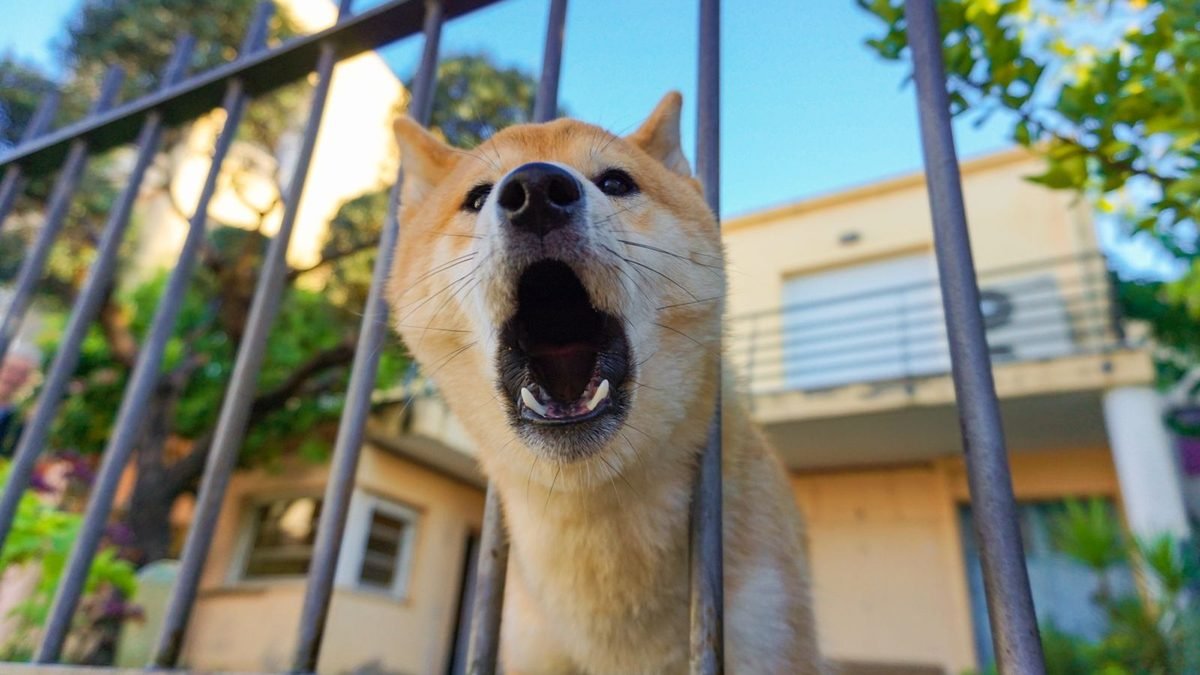
Some dogs bark at other dogs only in certain places, and that was a clue for me. The garden gate, the front window, the car and the sofa are all places a dog may feel are its own. When another dog passes by, my dog barks to say, “This is mine, keep moving.”
For example, my dog is deeply bonded to me, and he barks at dogs that come too close to me on a narrow pavement or in a crowded place. This is normal guarding instinct, and it is not a sign that a dog is dominant or badly behaved. It becomes a problem only when the dog rehearses it every day and the barking gets louder and harder to stop.
Once I saw the pattern, I stopped asking why is my dog barking at other dogs in general, and started asking where it happens — and the where gave me the answer.
The answer, for us, was management first. When my dog barked at dogs through the front window, I blocked the view with a curtain and gave him something else to do in that spot, such as a chew or a puzzle feeder. On walks, I give a little extra space around other dogs near our home, and I reward him for noticing the other dog and then turning back to me. A simple cue helps too. I taught a calm “thank you, enough” and then guide him away. The goal is not to remove the instinct, but to give the dog a job that is calmer than barking.
4. Too Little Social Practice
Social skills are learned, and dogs that missed out on meeting other dogs when they were young often bark because they simply do not know what to do. My dog did not have many dog friends as a puppy, and for a long time he had no idea how to greet, how to read another dog’s signals, or how to walk away from a meeting that felt awkward.
The result was barking, and the barking was usually a mix of worry and excitement. I made the mistake once of taking him to a busy dog park and hoping for the best. That kind of flooding only made things worse, because he was overwhelmed and the barking became a habit.
If your dog never learned how to meet other dogs, why is my dog barking at other dogs is really a question about practice, not about temper.
The better way, I found, is slow and controlled. I started at a distance where my dog could see other dogs but still listen to me. I used calm, steady dogs as role models rather than bouncy, excitable ones. I kept meetings to a few seconds, on a loose lead, and ended them before he got overexcited. Short, positive experiences beat long, stressful ones every time. With steady practice, my dog built a small library of good meetings, and the barking lost its purpose.
Tip: Short, positive meetings beat long, stressful ones. End every greeting while your dog is still calm, and your dog will start to expect good things from other dogs.

5. Feeling Trapped on the Lead
I worked this one out by watching dogs meet off the lead. They usually approach in a curve, sniff, circle, and move on. On the lead, though, two dogs are pulled toward each other in a straight line, face to face, with no way to move away. That is a very different meeting, and for many dogs it is a frightening one. The lead takes away the flight option, so the only option left is to bark.
Add a tight lead and the problem grows, because tension travels straight down the lead into the dog. Dogs can feel your grip tighten before you even notice it yourself, and that tension tells them something is wrong. On the lead, why is my dog barking at other dogs made perfect sense once I saw it from his side: he could not move away, so he made noise instead.
The fix started with my hands. Keep the lead loose, even when another dog appears, and walk in a gentle arc around the other dog instead of heading straight at it. I stopped doing head-on, nose-to-nose greetings on the lead altogether. If my dog wants to say hello, I choose a wide open space and let both dogs move freely, or we skip the greeting and keep walking. A dog that knows it can move away is a dog that does not need to shout.

6. A Habit That Got Rewarded
Dogs do what works, and I had to admit I was part of this problem. If barking has ever made the other dog go away, ended a walk, earned a treat, or got the dog picked up and carried, the dog has learned a simple lesson: barking works.
I used to offer a treat to quiet my barking dog. He heard the bark, then got a treat, and concluded that barking is how treats appear. I also used to turn around and go home every time he barked. He wanted to leave, the barking made it happen, and the habit grew stronger. The hardest part was admitting that why is my dog barking at other dogs was partly my doing, because every bark had been quietly rewarded.
Breaking a rewarded habit took consistency, and everyone in my household had to follow the same rules. I started rewarding the behaviour I wanted instead. When my dog saw another dog and stayed quiet, even for a second, I marked it with a calm word and a treat. When he looked at me instead of barking, I rewarded that too. I stopped letting barking be the thing that ended the encounter every time. Sometimes we walk past calmly, sometimes I turn away before the barking starts, and sometimes I simply wait at a distance until he settles. The message I wanted to send is that quiet, calm behaviour is what pays, not noise.
7. Tiredness and Unmet Needs
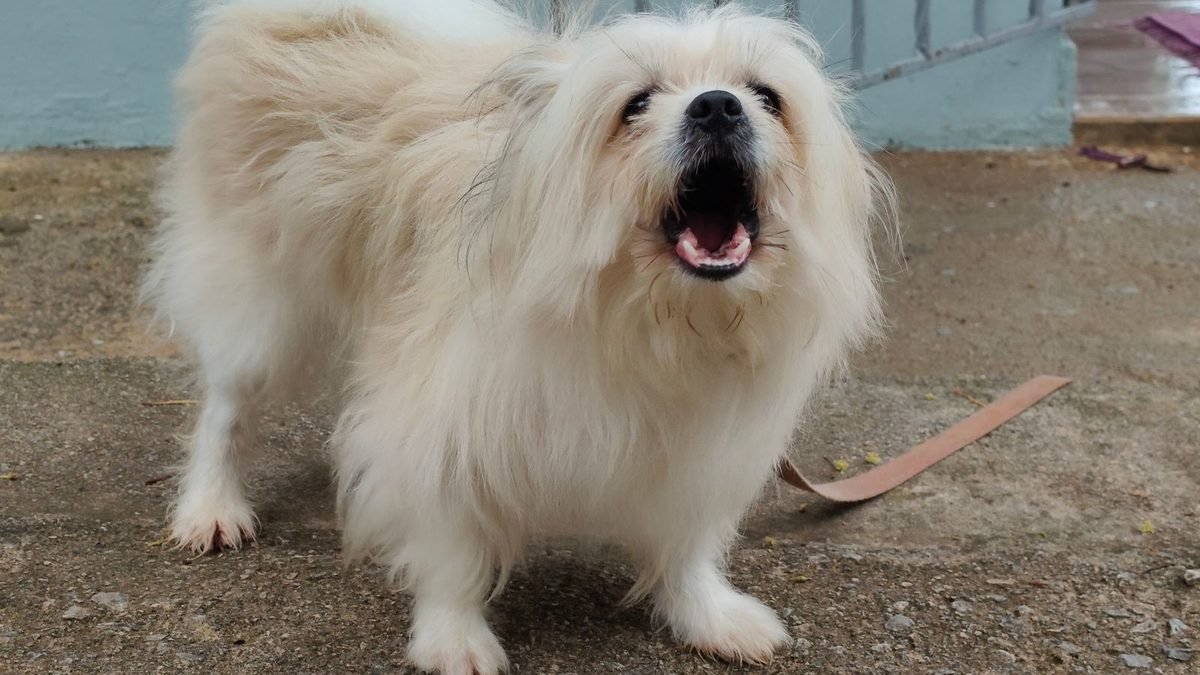
Sometimes the reason is simpler and easier to miss. A dog that is tired, hungry, bursting for the toilet, or full of unspent energy has a much shorter fuse than usual. My dog is worst on days when we have skipped our morning walk, and he barks from sheer frustration. And a dog that is overtired, much like a tired child, may react to small things that would not normally bother it.
If you are wondering why is my dog barking at other dogs all of a sudden, and the change came out of nowhere, it is worth asking your vet to check that nothing is wrong. This is general information, not a diagnosis, and only a vet who can see your dog can say what is going on. On tired days, why is my dog barking at other dogs was the wrong question — the right one was whether he had slept, eaten and rested enough.
For everyday life, the basics help more than people expect: a regular routine, enough rest, good food, fresh water, toilet breaks, and a mix of walks and quiet play. A dog whose needs are met is a dog with less to shout about.
This article is for general information only and is not veterinary advice. Always consult a licensed veterinarian for your dog’s health.
Why Is My Dog Barking at Other Dogs on Walks?
Walks are where most barking happens, so walks are where the fix happened for us too. I did not need special equipment or a perfect dog. I needed a simple plan that I could repeat, calmly, every day. Here is a five-step plan that worked for us. That plan is also my answer when someone asks why is my dog barking at other dogs on walks, because it works on the walk itself, not just in theory.
- I pick quieter routes and times. We walk early in the morning or later in the evening, and I choose wide paths where we can keep our distance.
- I keep a bubble of space. I learned the distance at which my dog can see another dog and still listen to me, and I protect that bubble.
- I turn before the barking starts. When I see another dog, I arc away or do a cheerful U-turn before my dog reacts, and I reward the turn.
- I play the look-and-turn game. Every time my dog looks at another dog and then looks back at me, I mark it and reward it.
- I scatter treats on the ground. When another dog passes at a safe distance, I scatter a few treats in the grass. He links other dogs with good things.
Key takeaway: Distance is your best friend. Every calm walk at a comfortable distance teaches your dog that other dogs are safe, and that is what makes the barking fade.
I keep sessions short. Ten calm minutes beat an hour of barking, and every quiet walk is a deposit in the bank. If a walk goes wrong, I do not worry. We go home, rest, and try again tomorrow at a bigger distance. And if you catch yourself thinking, why is my dog barking at other dogs again, remember that progress is rarely a straight line. It is steady if you keep the plan simple and repeat it.

What Not to Do When Your Dog Barks
I made most of these mistakes before I knew better. It is tempting to shout, yank the lead, or scold a barking dog, but these reactions usually make things worse. Shouting adds more noise to an already noisy moment, and your dog may think you are barking along. Yanking the lead hurts and adds fear to the situation, which is the opposite of what you want. Never punish a growl either. A growl is a warning, and a dog that is punished for growling may stop warning and go straight to a snap. I only stopped making these mistakes when I started asking why is my dog barking at other dogs before I reacted, instead of after.
Forcing greetings is another mistake I made. Dragging my dog up to every dog we met taught him that walks were something to dread. And finally, I learned not to use the walk itself as the only training time. Short practice sessions at home, where my dog is calm, are where new habits are built. The walk is where we show off the calm behaviour, not where I demand it for the first time.

When to Ask a Professional for Help
Most barking at other dogs improves with distance, patience and the plan above, and that is what happened for us. But there are times when extra help is the right move. If the barking is getting worse instead of better, if your dog lunges, snaps or cannot calm down after the other dog has gone, or if you feel stuck or worried on every walk, talk to a certified, force-free dog trainer or a qualified behaviourist.
They can watch you and your dog together and build a plan for your exact situation. The American Kennel Club’s guide to why dogs bark is also a useful starting point. And if the barking started suddenly, or your dog seems unwell or in pain, ask your vet to check first. Getting help is not a failure. It is the fastest way to make walks enjoyable again for both of you. If you have worked through the reasons and you still wonder why is my dog barking at other dogs, that is the moment to get a second pair of eyes on it.
FAQs
Is it normal for dogs to bark at other dogs?
Yes. Barking is how dogs communicate, and most dogs bark at other dogs at some point. It only becomes a problem when it happens on every walk, your dog cannot calm down, or the barking is getting worse. A dog that barks sometimes and settles quickly is usually just being a dog.
Will my dog grow out of barking at other dogs?
Some young dogs do settle as they gain confidence and experience, but in my experience barking rarely disappears on its own if it is being rewarded or if the dog is afraid. The dogs that improve are usually the ones whose owners change the pattern with distance, rewards and calm practice.
Should I let my dog greet every dog on a walk?
I stopped doing that, and our walks got much easier. Most adult dogs are happier with a small circle of dog friends and polite distance from strangers. Short greetings with known, friendly dogs are plenty. Skipping greetings is not rude, and it keeps walks calm.
How long does it take to stop the barking?
It depends on the reason, your dog’s history, and how often you practise. I saw a real difference within a few weeks of calm, consistent work, and bigger changes over two to three months. The key is steady progress at your dog’s pace, not a quick fix.

Key takeaway: Barking is communication, not bad behaviour. Match the reason to the response, keep your distance, and reward the calm, and the barking will fade.
The next time you wonder why is my dog barking at other dogs, remember the seven reasons. Fear, excitement, guarding, too little practice, feeling trapped, a rewarded habit, or simple unmet needs cover almost every case. I learned to read the early signs, keep my distance, and reward the calm moments, and our walks started to feel easy again. If you want the deeper dive, read our guide Why Does My Dog Always Bark at Other Dogs — 10 Hidden Reasons You Never Expected, and explore more training and care guides on our blog.